
Unlike a blog, this is not a collection of musings or things that caught our attention today.
Instead, it is a collection of the important insights, trends and issues we have encountered in our work with our clients and the solutions we have developed.
This why we call it our Knowledge Centre. It is where we share the collective knowledge of TrinityP3. We add to this regularly. We update it when and where needed. We recommend bookmarking this page and be sure to visit regularly when looking for inspiration, insight and knowledge on the world of marketing management.
Our Latest Articles

Why ‘Doing More with Less’ is Killing Marketing Effectiveness
In the corridors of modern marketing departments and within the walls of increasingly common in-house agencies, a dangerous mantra has taken hold: “Do more with less.” On the surface, it sounds like a noble pursuit of efficiency - a corporate ...

The MarTech Mirage: Why More Technology Usually Means Less Marketing Performance
In the last decade, the marketing technology landscape has exploded. We went from a few hundred tools to a staggering ecosystem of over 11,000 solutions. For the modern marketer, this "MarTech" explosion was promised to be the ultimate enabler—the engine ...

Why Privacy-First Marketing is Your New Strategic Frontier
In the current marketing landscape, it is easy to be dazzled by the "sexy and cool" allure of Artificial Intelligence. From generative creative to predictive modelling, AI dominates every industry conversation. However, while everyone is looking at the AI shiny ...
Most Popular Articles

What is the definition of Marketing?
I was the guest lecturer for the EMBA course at the Sydney Business School, University of Wollongong for several years. The topic title was marketing today, and I was interested to know how this group of business executives and tomorrow’s ...

Top 10 Ethical Issues in Marketing for 2026
Stay ahead of the curve in ethical marketing practice with this comprehensive guide from TrinityP3 to the top ethical issues facing the industry and how to navigate them with integrity. What is ethical marketing and why does it matter? Here ...

How to Select an Advertising Agency – 7 Key Criteria
Choosing a new advertising agency, be that creative, media, digital, experiential, shopper, pr or any one of the many other types of service providers is not something to be taken lightly. The cost and time involved and the impact on ...

Scope of Work vs Scope of Services
We have talked and written many times about the importance of the scope of work in regard to setting or benchmarking agency remuneration based on productivity and not simply the cost of resources. But there is often confusion in regard ...

5 Ways Agencies Can Present Credentials More Effectively
For the past 20 years, I have literally sat through more than a thousand agency credentials presentations. Some were part of a pitch or tender credentials presentation, and others were when I was engaged in providing feedback to help agencies ...

What are the biggest issues facing the media industry?
Media advertising continues to be the most significant single component of most advertisers' marketing budgets. Paid media is a substantial investment across traditional media and, increasingly, into digital channels, which are eclipsing traditional broadcast media channels. However, with this change ...
Browse all our insights

From Cost Centre to Growth Engine: Why You Must Master the Language of Finance
In the modern corporate world, there is a growing, invisible wall between the marketing department and the C-suite. On one side, marketers speak of "engagement," "virality," and "brand sentiment". On the other side, CFOs and Procurement leads are focused on ...

The Agency Growth Blueprint: How TrinityP3 Empowers Agency Leaders to Scale, Pitch, and Win
Let’s be honest: running an agency is an exercise in extreme resilience. Between the fragmenting media landscape, the relentless march of AI-driven production, and procurement teams that have turned “doing more with less” into a professional sport, the path to ...

How Marketers Can Master the Pitch Process and Select the Best Fit Agency
For marketing leaders and procurement professionals, the agency selection process—the pitch—is arguably the most critical and high-stakes decision you will make. It determines the creative trajectory, media efficiency, and overall market performance of your brand for years to come. Yet, ...

How Marketers Can Validate Agency Promises and Avoid the Pitching Fantasy
The modern agency pitch is supposed to be a rigorous process built on transparency and strategic merit. Yet, for too many marketers, the final selection often feels like a gamble. You award the contract, only to discover six months later ...

Rethinking Commercial Conflicts of Interest in Agency Selection
Rigid, often instinctive rules have long governed the process of selecting an advertising agency, chief among them being the strict avoidance of competitive conflicts of interest (COI). This historical precept dictates that an agency, to maintain loyalty and confidentiality, must ...

Why AI is Outpacing Traditional Methods for Creating Your Tender List
The hunt for the perfect marketing agency—a partner capable of transforming your brand, driving market share, and delivering measurable results—is one of the most critical decisions a marketing or procurement team will make. A poor choice can lead to wasted ...
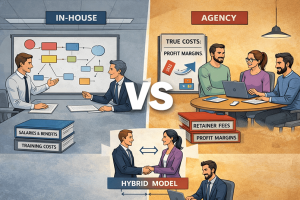
In-House vs Marketing Agency: Which Is Better?
The decision of whether to invest in an in-house agency (IHA), partner with an external marketing agency, or adopt the increasingly popular hybrid model is one of the most critical and complex strategic choices facing modern marketers. It’s not simply ...
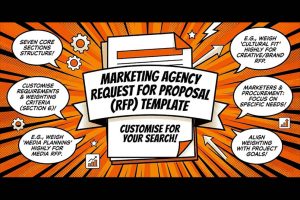
Marketing Agency RFP Template (Download)
For far too long, the Request for Proposal (RFP) process has been a necessary evil—a bureaucratic exercise often disconnected from true business needs. Marketers and procurement teams frequently reuse generic templates that focus heavily on glossy credentials and superficial compliance, ...
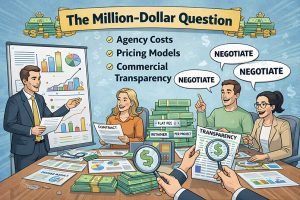
How Much Do Marketing Agencies Cost in 2026?
How Much Does a Marketing Agency Cost? This is arguably the most common and complex question any marketer or procurement professional asks during an agency selection process: "How much does a marketing agency cost these days?" The straightforward answer is ...
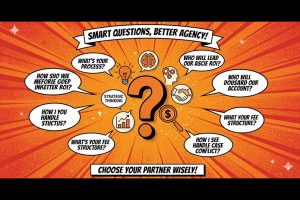
Questions to Ask Before Hiring a Marketing Agency
Choosing a marketing agency is one of the most important investment decisions a marketer makes. However, too often, the process turns into a superficial "beauty pageant," where the decision is based on the most attractive speculative creative idea—an outcome that ...

How to Choose a Marketing Agency
For decades, the default approach to selecting a marketing agency has been a time-consuming, expensive, and often ineffective beauty pageant built around speculative creative work. Marketers ask multiple agencies to produce creative concepts for free, hoping to find a winning ...
TrinityP3 AI Agency Search: Smarter Agency Selection and Qualified Pitch Lists
The agency landscape is broader, more fragmented, and faster than ever. For Marketers and Procurement teams seeking a new partner, compiling a comprehensive and qualified consideration list can be a major drain on time and resources. For Agencies, standing out ...

Our Latest Podcast:

Managing Marketing: Revealing The Truth Behind Jim’s Group’s Success
Joel Kleber, CMO of Jim's Group, admits that he’s not a classically trained marketer. And thankfully is glad that he’s not. Otherwise he may never have achieved the commercial heights that he has if he was bogged down by process, frameworks and risk-averse thinking. Joel shares how he helped spearhead ...