
Terms, Metrics, and Strategic Alignment
Part I: The Foundations of the Financial Worldview
Part II: Granular Financial Metrics for Value Creation
Part III: Operational Efficiency & The P&L
Part IV: Deep Dive into Procurement & Sourcing
Part V: Working Capital & The Balance Sheet
Part VI: Advanced Risk Management
Part VII: Metrics Translation Guide (Marketer to CFO)
Part VIII: Building the “CFO-Ready” Business Case
Part IX: The Marketer as a Portfolio Manager
The Finance Fluency Quiz for Marketers

To move from a “cost centre” to a “profit centre” in the eyes of the CFO and Procurement, marketers must master the language of value creation, capital efficiency, and risk mitigation. This guide provides the granular detail needed to build a commercially sound business case.
This guide is designed to be the definitive “Rosetta Stone” for the modern marketer including:
- Senior marketers presenting budgets
- Marketers working with procurement
- CMOs under margin pressure
- Growth marketers managing CAC payback
- Anyone tired of finance saying “no” without explanation.
It is a deep dive that moves beyond surface-level definitions into the structural mechanics of corporate finance.
By the end of this guide, you will understand how to build a marketing plan that looks, smells, and performs like a financial investment portfolio.
Part I: The Foundations of the Financial Worldview
To speak to a CFO or a Procurement lead, you must first understand their primary directive: The Maximization of Shareholder Value. They do not care about “virality” unless it reduces the Cost of Equity. They do not care about “awards” unless they contribute to Economic Value Added (EVA).
1. The Three Financial Statements: A Marketer’s Map
Before diving into metrics, you must understand where your work “lives” in the company’s books.
- The Income Statement (P&L): This is where your budget sits (as an expense) and where your sales are recorded. Most marketers live here, focusing on Top-line Revenue.
- The Balance Sheet: This is a snapshot of what the company owns (Assets) and owes (Liabilities). When you build a brand that allows the company to charge a premium, you are creating an Intangible Asset (Goodwill).
- The Cash Flow Statement: This is the most important document to a CFO. It tracks the actual movement of cash. You can be “profitable” on paper but go bankrupt because your cash is tied up in unpaid invoices or unsold inventory.
How to use this on Monday: Identify where your three biggest marketing initiatives appear across the P&L, Balance Sheet, and Cash Flow statement, not just the marketing budget.
Part II: Granular Financial Metrics for Value Creation
2. Internal Rate of Return (IRR) – The “Gold Standard”
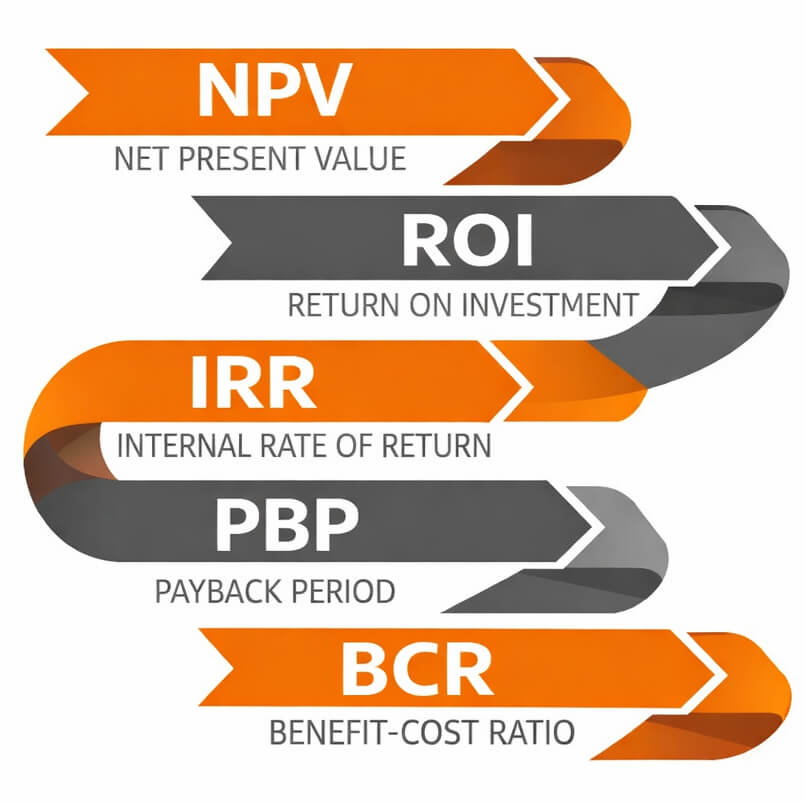
IRR is the annualized effective compounded return rate that makes the Net Present Value (NPV) of all cash flows from a particular project equal to zero.
- For Marketers: Think of it as the “interest rate” your marketing campaign earns. If you spend $1M today and it generates cash flows over the next three years, the IRR tells the CFO if that $1M would have been better spent elsewhere.
- The Conversation: “We are prioritizing the loyalty program relaunch because its projected IRR is 28%, significantly higher than the 15% we expect from the cold-prospecting display ads.”
3. Weighted Average Cost of Capital (WACC) & The Hurdle Rate
The WACC is the average rate a company pays to finance its assets (the cost of its debt and equity). The Hurdle Rate is the minimum return the CFO requires before green-lighting a project.
- For Marketers: If the company’s WACC is 10%, any marketing campaign with an IRR of 8% is “value-destructive.” You are effectively losing the company money even if the campaign is “profitable.”
- The Conversation: “By reducing our CAC through organic SEO, we are ensuring our long-term marketing ROI stays well above our 12% hurdle rate.”
4. Net Present Value (NPV)
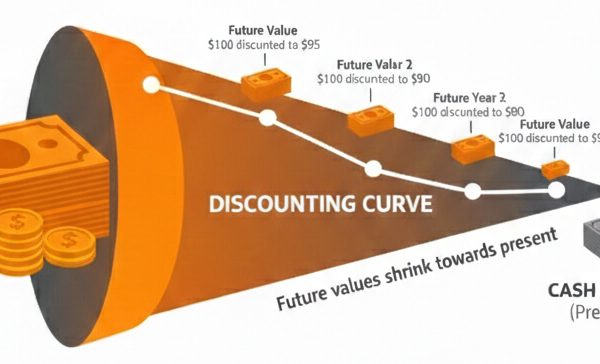
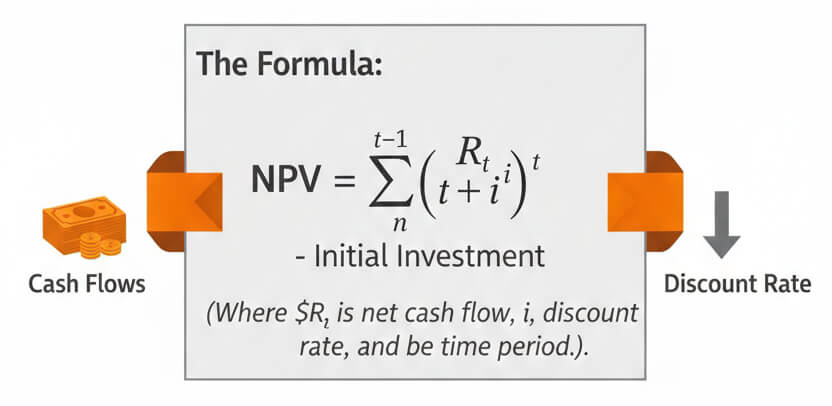
NPV calculates the value of a future stream of payments in today’s dollars, adjusted for risk and the time value of money.
- For Marketers: A customer who stays for 5 years is worth a certain amount. NPV helps you “discount” those future years back to today so you know exactly how much you can afford to spend to acquire them now.
How to use this on Monday: Calculate the IRR or NPV for your top two campaigns and compare them to your company’s hurdle rate before approving spend.
Part III: Operational Efficiency & The P&L
5. Gross Margin vs. Contribution Margin
This is where many marketers stumble. Revenue is a “vanity metric” if the margins are thin.
- Gross Margin: Revenue minus the direct cost of goods sold (COGS).
- Contribution Margin: Revenue minus all variable costs (COGS + variable marketing). This tells the CFO how much “contribution” each sale provides toward covering the company’s fixed costs (rent, salaries).
- The Conversation: “We’ve shifted our ad spend to Product X. While it has a lower price point than Product Y, its higher Contribution Margin means we hit our break-even point 20% faster.”
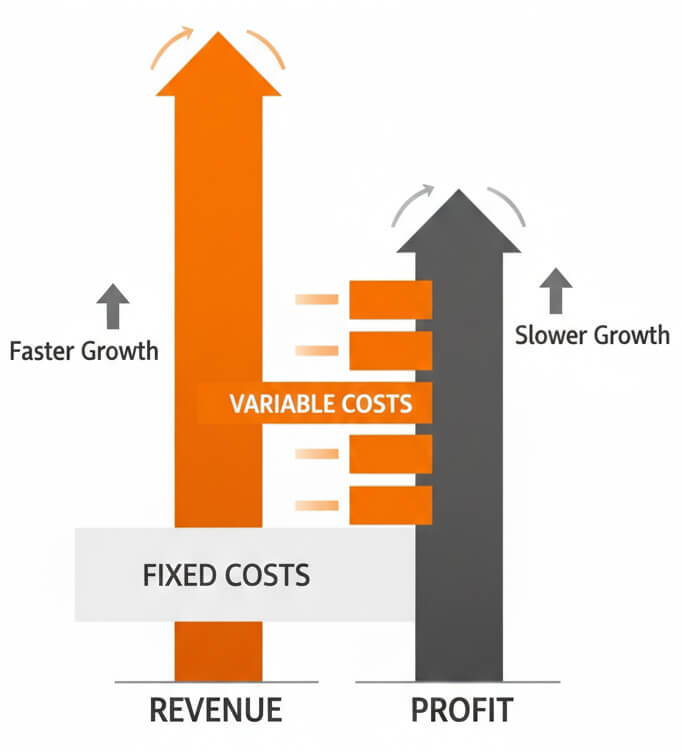
6. Operating Leverage
Operating leverage measures the proportion of fixed costs to variable costs.
- The Detail: If your company has high fixed costs (like a software company), every additional dollar of marketing-driven revenue is mostly profit. If you have high variable costs (like a consulting firm), profit grows slowly.
- The Conversation: “Because we have high operating leverage, this 10% increase in lead volume will result in a 25% increase in Net Operating Income.”
How to use this on Monday: Re-rank your campaigns by contribution margin (not revenue) and shift budget toward the fastest break-even activity.
Part IV: Deep Dive into Procurement & Sourcing
Procurement is no longer just “the people who say no.” They are focused on Strategic Sourcing and Supply Chain Resiliency.
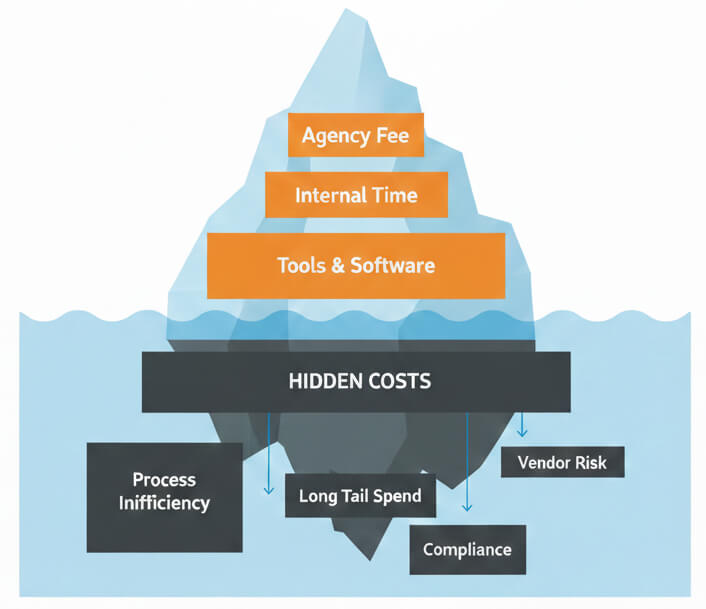
7. TCO (Total Cost of Ownership)
Procurement looks at more than the agency’s hourly rate. They look at the “hidden” costs.
- Example: A cheap agency that requires 20 hours of internal management time per week is more expensive than an expensive agency that requires 2 hours.
- The Conversation: “We selected Agency B despite the higher retainer because their TCO is lower when you factor in their proprietary tech stack, which eliminates our need for $50k in annual software licenses.”
8. Cost Avoidance vs. Cost Savings
- Cost Savings (Hard Savings): Reducing the price of something you already buy (e.g., negotiating a 10% discount on your media software).
- Cost Avoidance (Soft Savings): Taking action to prevent a future price increase (e.g., signing a 3-year contract now to avoid an annual 5% price hike).
- The Conversation: “By locking in our TV upfronts early, we’ve achieved $200k in cost avoidance against the projected inflation in ad rates for Q4.”
9. Zero-Based Budgeting (ZBB)
In ZBB, you don’t start with last year’s budget and add 5%. You start at zero and must justify every single dollar based on its projected return.
- The Conversation: “Instead of a ‘keep-the-lights-on’ budget, we’ve built this year’s plan using ZBB principles, aligning every dollar of spend directly to our three highest-IRR customer segments.”
How to use this on Monday: Reassess one agency or vendor using a TCO lens, including internal time, tools, and change management costs.
Part V: Working Capital & The Balance Sheet
The CFO’s biggest headache is often Liquidity (having enough cash to pay the bills today).
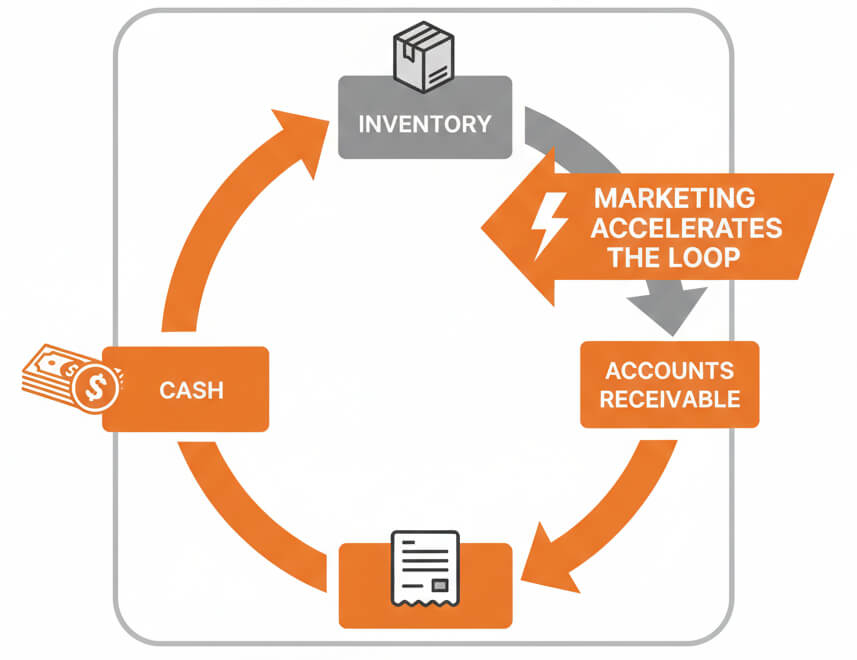
10. The Cash Conversion Cycle (CCC)
The CCC is the number of days it takes for a company to convert its investments in inventory and other resources into cash flows from sales.
- Marketing’s Role: If you run a promotion that moves “stale” inventory, you are a hero to the CFO because you are “unlocking” cash that was trapped in a warehouse.
- The Conversation: “This clearance campaign isn’t just about sales; it’s about reducing our Days Sales of Inventory (DSI) to improve our overall working capital position.”
11. Customer Acquisition Cost (CAC) Payback Period
This is the “Time to Break Even” for a single customer.
- The Granularity: If it costs $100 to get a customer, and they pay you $20/month, your payback period is 5 months.
- The Finance View: The CFO wants to see this period get shorter over time. If it gets longer, the company is “burning cash” to grow, which is risky.
- The Conversation: “Our CAC payback period has dropped from 11 months to 7 months due to our improved lead-scoring algorithm, significantly de-risking our growth strategy.”
How to use this on Monday: Identify one marketing initiative that could accelerate cash collection or unlock trapped inventory this quarter.
Part VI: Advanced Risk Management
Finance manages the business by looking at Risk-Adjusted Returns.
12. Sensitivity Analysis (The “Stress Test”)
Marketers are often accused of being “too optimistic.” A sensitivity analysis proves you are realistic. It shows a range of outcomes based on changing variables.
- The Conversation: “In our ‘Base Case,’ we see a 3:1 ROI. However, we ran a sensitivity analysis: even in a ‘Worst Case’ scenario—where CPMs rise 20% and conversion drops 10%—the campaign still maintains a positive Contribution Margin.”
13. Opportunity Cost
Every dollar spent on “Brand Awareness” is a dollar not spent on “Product Development” or “Sales Commission.”
- The Conversation: “We recognize the opportunity cost of this $2M brand spend. To mitigate it, we are structuring the campaign to include a direct-response component that feeds the sales pipeline immediately.”
How to use this on Monday: Run a simple sensitivity analysis on your largest campaign by flexing conversion rate and CPM assumptions by ±20%.
Part VII: Metrics Translation Guide (Marketer to CFO)
To succeed, you must stop using “proxy metrics” (Likes, Impressions) and start using “business metrics” (Margin, Cash, Risk).
| Marketing Metric | The CFO’s Interpretation | The “Speak Finance” Upgrade |
| Brand Awareness | A vague “soft” cost with no clear return. | Market Share Defense / Reduction in Long-term CAC |
| Engagement Rate | A “vanity metric” that doesn’t pay the bills. | Customer Retention & LTV Extension |
| CPM (Cost per Mille) | A commodity cost. | Media Buying Efficiency & Cost Avoidance |
| Conversion Rate | EA tactical optimization. | Funnel Throughput & Capital Efficiency |
| Content Creation | An administrative expense. | Developing Reusable Intellectual Property (Assets) |
How to use this on Monday: Replace one vanity metric in your next report with its finance equivalent (margin, cash, payback, or risk).
Part VIII: Building the ``CFO-Ready`` Business Case
When you present your next budget, follow this structure to ensure it passes the finance test:
- Executive Summary: State the required capital and the projected NPV/IRR.
- Strategic Alignment: How does this spend support the company’s Hurdle Rate?
- Financial Mechanics:
- CAPEX vs. OPEX: Is this a one-time investment in an asset or an ongoing operational cost?
- Payback Period: When will the company get its cash back?
- Risk Mitigation: Present your Sensitivity Analysis. What happens if the market shifts?
Procurement Strategy: How have you Value-Engineered the costs? (e.g., “We negotiated a volume-based discount with our primary media vendor.”)
How to use this on Monday: Rewrite your next budget slide to lead with payback period, NPV, and risk mitigation before tactics.
Part IX: The Marketer as a Portfolio Manager
The most successful CMOs today act like Portfolio Managers. They have:
- Low-Risk/Steady-Return Assets: (SEO, Retargeting, Email) – These cover the “WACC.”
- High-Risk/High-Reward Assets: (New market entries, experimental channels) – These provide the “Alpha” or outsized growth.
When you sit down with the CFO, show them that you aren’t just “spending money.” Show them you are allocating capital into a diversified portfolio designed to maximize the company’s Enterprise Value.
By adopting this granular financial language, you move from being a “discretionary expense” (the first thing cut in a recession) to being a “strategic driver of liquidity” (the last thing they would ever touch).
How to use this on Monday: Categorise your marketing spend into low-risk, core-return, and high-risk growth bets and rebalance if needed.