
Unlike a blog, this is not a collection of musings or things that caught our attention today.
Instead, it is a collection of the important insights, trends and issues we have encountered in our work with our clients and the solutions we have developed.
This why we call it our Knowledge Centre. It is where we share the collective knowledge of TrinityP3. We add to this regularly. We update it when and where needed. We recommend bookmarking this page and be sure to visit regularly when looking for inspiration, insight and knowledge on the world of marketing management.
Our Latest Articles

Why ‘Doing More with Less’ is Killing Marketing Effectiveness
In the corridors of modern marketing departments and within the walls of increasingly common in-house agencies, a dangerous mantra has taken hold: “Do more with less.” On the surface, it sounds like a noble pursuit of efficiency - a corporate ...

The MarTech Mirage: Why More Technology Usually Means Less Marketing Performance
In the last decade, the marketing technology landscape has exploded. We went from a few hundred tools to a staggering ecosystem of over 11,000 solutions. For the modern marketer, this "MarTech" explosion was promised to be the ultimate enabler—the engine ...

Why Privacy-First Marketing is Your New Strategic Frontier
In the current marketing landscape, it is easy to be dazzled by the "sexy and cool" allure of Artificial Intelligence. From generative creative to predictive modelling, AI dominates every industry conversation. However, while everyone is looking at the AI shiny ...
Most Popular Articles

What is the definition of Marketing?
I was the guest lecturer for the EMBA course at the Sydney Business School, University of Wollongong for several years. The topic title was marketing today, and I was interested to know how this group of business executives and tomorrow’s ...

Top 10 Ethical Issues in Marketing for 2026
Stay ahead of the curve in ethical marketing practice with this comprehensive guide from TrinityP3 to the top ethical issues facing the industry and how to navigate them with integrity. What is ethical marketing and why does it matter? Here ...

How to Select an Advertising Agency – 7 Key Criteria
Choosing a new advertising agency, be that creative, media, digital, experiential, shopper, pr or any one of the many other types of service providers is not something to be taken lightly. The cost and time involved and the impact on ...

Scope of Work vs Scope of Services
We have talked and written many times about the importance of the scope of work in regard to setting or benchmarking agency remuneration based on productivity and not simply the cost of resources. But there is often confusion in regard ...

5 Ways Agencies Can Present Credentials More Effectively
For the past 20 years, I have literally sat through more than a thousand agency credentials presentations. Some were part of a pitch or tender credentials presentation, and others were when I was engaged in providing feedback to help agencies ...

What are the biggest issues facing the media industry?
Media advertising continues to be the most significant single component of most advertisers' marketing budgets. Paid media is a substantial investment across traditional media and, increasingly, into digital channels, which are eclipsing traditional broadcast media channels. However, with this change ...
Browse all our insights
Why ‘Doing More with Less’ is Killing Marketing Effectiveness
In the corridors of modern marketing departments and within the walls of increasingly common in-house agencies, a dangerous mantra has taken hold: “Do more with less.” On the surface, it sounds like a noble pursuit of efficiency - a corporate ...
The MarTech Mirage: Why More Technology Usually Means Less Marketing Performance
In the last decade, the marketing technology landscape has exploded. We went from a few hundred tools to a staggering ecosystem of over 11,000 solutions. For the modern marketer, this "MarTech" explosion was promised to be the ultimate enabler—the engine ...
Why Privacy-First Marketing is Your New Strategic Frontier
In the current marketing landscape, it is easy to be dazzled by the "sexy and cool" allure of Artificial Intelligence. From generative creative to predictive modelling, AI dominates every industry conversation. However, while everyone is looking at the AI shiny ...

The Effectiveness Gap: Why Marketing Measurement is Failing the Commercial Test (and How to Fix It)
In the modern marketing department, data is the one thing we have in abundance. We are drowning in dashboards, swimming in "real-time" analytics, and constantly bombarded by the latest AI-driven attribution tools promising to reveal the "truth" behind every dollar ...

Defining Minimum Spend Thresholds for Marketing Effectiveness – Case study
The Brief This client engaged TrinityP3 to determine whether minimum investment thresholds should be established for their marketing allocations to ensure campaigns deliver a meaningful impact. With finite budgets distributed across a diverse portfolio and increasing pressure for accountability, the ...

The Definitive Guide to Marketing Productivity: A Strategic Roadmap for CMOs and Fractional Leaders
In the current economic landscape, marketing leaders are no longer just "brand custodians"; they are the architects of growth and the engineers of operational efficiency. For the permanent or the Fractional CMO, the challenge is the same: how to extract ...

Why Trust in the Agency Pitch is a Debt, Not a Gift
In the world of agency search and selection, we often talk about trust as if it were a merit badge - something an agency earns by the end of a final presentation, or a gift - something a marketer bestows ...

Digital capability audit for APAC real asset manager and developer – Case Study
Challenging problem TrinityP3 is not always known for tech advisory. However, over the past few years we have been helping clients navigate the often-murky world of martech that can be skewed by vendor self-interest and agency preferred partnerships. This APAC ...

Focus your pitch for a better pitch result
Somebody very wise (Often misattributed to Mark Twain, but was actually Blaise Pascal) once famously wrote “Je n'ai fait celle-ci plus longue que parce que je n'ai pas eu le loisir de la faire plus courte”. The point being, keeping ...

The End of the Cost-Cutting Era: Why Your Savings Mandate is Creating Massive Marketing Waste
A New Strategic Blueprint for Marketing Procurement: How to Pivot from Price Taker to Value Architect The marketing procurement function is at a pivotal crossroads. For years, the mantra of "cost savings" has driven every decision, turning procurement managers into ...

Why the agency pitch is often where strategy goes to die and how to fix it
If you’ve read the WARC Future of Strategy report, you’ll know we are currently living through a bizarre paradox. Eighty per cent of strategists believe their discipline is at a crossroads, and over sixty per cent feel that strategy is ...
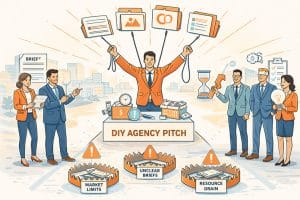
Own Your Agency Search: The Power of DIY, and the Pitfalls to Avoid
The age of outsourcing every agency pitch is drawing to a close. In fact, our TrinityP3 State of the Pitch research consistently shows that marketers and their procurement colleagues now manage 80% of agency pitches (with marketers directly leading 60% ...

Our Latest Podcast:

Managing Marketing: Revealing The Truth Behind Jim’s Group’s Success
Joel Kleber, CMO of Jim's Group, admits that he’s not a classically trained marketer. And thankfully is glad that he’s not. Otherwise he may never have achieved the commercial heights that he has if he was bogged down by process, frameworks and risk-averse thinking. Joel shares how he helped spearhead ...