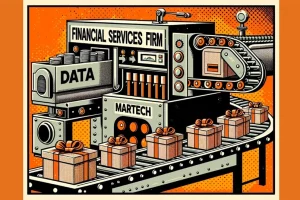
Online shopping trends: The death of a merchant

This post is by Chris Sewell, Business Director at TrinityP3. Chris has a wide ranging knowledge of all areas of the advertising and procurement world and specializes in helping companies understand the environmental impact of their marketing spend.

Today the retail supply chain is undergoing a game changing transition that will remove a number of established businesses that sit in the middle of any purchase. The raise of on-line trading will leave these businesses with eroded  brand values or worse, be road-kill on the side of the technology highway.

The origins of today’s modern marketplace can be traced back thousands of years. The opening up of distant trade routes led to multiple money making opportunities and a proliferation of middle men and women along the way.

The commercialization of the Internet in the 1990’s was a major game changer for the traditional retail model. Up until then the purchase of that ‘little black dress’ involved the gainful employment of numerous pairs of hands from farmers to shop assistants. While remote areas were serviced by catalogue shopping via direct mail the majority of goods followed the tried and tested route.

New financial vehicles have been deployed up and down the supply chain to help grease the wheels of business. Improvements to shipping, legal frameworks, marketing, local transport providers, warehouses, merchandisers as well as the removal of trade barriers have all had a hand to play in the endless pursuit of that perfect little black dress.

But nothing fundamentally challenged this well trodden business model like the arrival of the Internet.

Ecommerce shopping carts

Avoiding a mauling in the Mall

So what’s changing to cause this extinction of the merchant; the whole-hearted acceptance of purchasing on-line?
Continue reading “Online shopping trends: The death of a merchant ”

Posted in data & direct marketing, green marketing & sustainability, industry news & trends, interesting observations, marketing process optimisation, social media & digital marketing, strategic management | Tagged , , , , , , , , | Leave a comment

Procurement process: get all agencies in for a pitch Q&A?

This post is by Darren Woolley, Founder of TrinityP3With his background as analytical scientist and creative problem solver, Darren brings unique insights and learnings to the marketing process. He is considered a global thought leader on agency remuneration, search and selection and relationship optimisation.

Here is a procurement practice that I will never understand. When managing the tender process at some point they get all of the agencies into a room for a question and answer session.

The idea is that this ensures a level playing field and ensures that no agency has an unfair advantage over any other. The problem is I have never actually seen this achieve anything except to have the procurement team tick off a step in their procurement process.

This is particularly popular in government procurement processes, where I am told it is mandated by the procurement policy of government to ensure due diligence and governance in the process.

Now I understand if the sessions are just to provide information to the suppliers participating in the tender process, but considering it is a meeting of competitors, I think it is naive to expect competitors to ask questions that could reveal their competitive strategy.

stand out

The best way to demonstrate this is with an actual example of where this process went wrong. In this particular case, the tender was not a government tender, but a pharma-company who were undertaking a creative agency tender.

The tender process was similar to the ‘traditional’ and rather ‘old fashioned’ creative pitch, with a Q&A process around the RFP, where the team shared questions and answers with all respondents and then those responding with creative concepts were all asked to attend a single briefing session.

Q&A Session

So having received the extensive RFP documentation, the agencies were given two days to review the paper work and submit their questions to clarify the requirements and the process.

The process issues and questions were fairly straight forward, but the procurement team were concerned that there were many more process questions than there were questions about the requirements.

When you looked at the questions, they were fairly prosaic in regards to process, but the agencies asked very few questions on requirements because the agencies knew that all questions and the answers would be shared with all the other agencies.

So it would be counterproductive to ask questions that would reveal the agency’s strengths by using the questions to probe the desirability of those strengths through the Q&A process.

Continue reading “Procurement process: get all agencies in for a pitch Q&A?”

Posted in agency search & selection, agency solutions, interesting observations, marketing procurement, strategic management | Tagged , , , , , , , , | Leave a comment

How engagement agreements improve your agency interactions

This post is by Darren Woolley, Founder of TrinityP3With his background as analytical scientist and creative problem solver, Darren brings unique insights and learnings to the marketing process. He is considered a global thought leader on agency remuneration, search and selection and relationship optimisation.

I remember about 10 years ago, being engaged by a marketing team to work with a well known management consulting firm who had been brought in by senior management to restructure and improve the marketing process. The interesting observation was that rather then customising the structure and process to the strategic requirements, the management firm had a six-sigma developed process that they tried to impose on the marketing team in the interest of best practice.

What I also observed was there was little commitment from the marketing team to the process. The problem appeared to be there was little or no recognition that the current process was obviously functional. The team were not consulted to assist in determining the best way to improve the process of engagement between the internal team and marketing.

It was around this time that we developed the Engagement Agreement process.

The role of SLAs and KPIs in process

Around the time we commenced in using the Engagement Agreement process, I was also reviewing a large number of agency services agreements, that all contained either SLAs (Service Level Agreements) or KPIs (Key Performance Indicators). Many of the marketing and procurement people we were talking with seemed to believe that these contract clauses would assist in managing and improving agency process and performance.

There are two things that are misguided about this belief:

  1. Most SLAs and KPIs are based on the assumption that the performance of the agency is simply due to the agency alone. But this fails to recognise that the strategic and creative components are co-created and that the performance of the agency is directly impacted by the performance of the marketer.
  2. Many of the KPIs and SLA clauses I have reviewed do not go to the core of the process purpose and are often superficial and inconsequential and therefore have little or no impact on process or performance improvement.

Even as recently as last year a major corporation procurement team wanted me to sign a contract that would financially penalise us if we did not return phone calls within 2 hours 99.5% of the time. I was curious to see if the clause would be reciprocal (NO), wondered who would be monitoring the time lag between the call and the response time (NO ANSWER) and what impact on project performance did they expect from the KPI (NO IDEA).

KPIs and SLAs are great for places like call centres (where they were first used) but in complex relationships based on interactions and contributions from multiple parties to deliver the outcome they are far too 2-dimensional.

Continue reading “How engagement agreements improve your agency interactions”

Posted in agency solutions, interesting observations, marketing process optimisation, marketing procurement, strategic management | Tagged , , , , , , , , | Leave a comment

Advertising Climate Change – solving the square peg, round hole dilemma

Jon Bradshaw is the director of brand traction, a marketing consultancy for the modern age. He has over 20 years of experience in marketing and brand building. None of which is of any use any more. There are 24 metaphors in this article. Jon recognises he has a problem.

How to re-engage with your audience in the new marketing landscape

In the first half of this diatribe, I explained my view that the changes in the media landscape are reducing and may even remove our ability to interrupt the audience with our brand messages. This led to the conclusion that advertising has to evolve into something that people actually want or need in their lives in order to survive. Something they will pull into their world, rather than have us push it. I believe that as well as working out what the brand wants to say and where it wants to say it, we need to answer a third question; why would the audience want to engage with it? In part two I will explore this idea of why in more detail.

My view is that marketing has developed and evolved into four different approaches or nodes. And that one of the key issues with managing audiences and engagement today is that people don’t recognise the existence of these four approaches and the inherent differences between them in terms of how and why consumers engage. We end up trying to fit square peg advertising into round media holes. In so doing we risk losing the audience and consequently our livelihoods.

These four nodes or approaches to doing the job of advertising in my view are;

• story telling
• relationship building
• system building
• ecommerce

I’ll explain each one briefly, as in isolation I hope they’re fairly easy to understand. Crucially I will give a view on WHY consumers might choose to engage with this node. I’ll discuss how ‘new’ media affects the approach in good and bad ways. I’ll then talk about what I think we can conclude from this seemingly trite observation.

Story Telling must be entertaining

Historically marketing has used a ‘story telling’ approach. Brands create stories (or ads) about themselves. Consumers have engaged when it’s been informative and entertaining. The best ads work when we create entertaining, unexpected stories people can relate to. This is the mechanism most under threat from the decline of interruption as an option. The only reason for the audience to choose to engage is if the advertising is entertaining. That’s why as an industry we prize creativity so much. Why when we actually do the hard work on analysing effectiveness we find that ads that win creative awards are also often more effective. The more entertaining the ad is, the more people will choose to engage with it, beyond the forced intrusion of the ad into their schedule.

The issue is that this form is reliant on the push mechanism. I can count the number of ads people will actually choose to seek out and sacrifice their leisure time to watch on the fingers of one hand. One hand that’s lost a few fingers. We might like to kid ourselves that our ads are so highly creative that they are genuine entertainment. I certainly have. Given that places like HBO spend hundreds of millions of dollars trying to be entertaining and don’t always succeed, I think we might be somewhat delusional.

Integrated branded content is one solution to the issue. Can we make the brand part or all of the broadcast show? Networks and media owners are starting to grapple with this issue. I’m a fan of this approach when done well. When the brand has a real reason to be part of the show. When the show genuinely reflects what the brand wants to say. Some of the Masterchef integration has been first class. Some of it clunky and intrusive. Shows like Iconoclasts and the amazing stuff from Red Bull Media house show it is possible to do long form brand content, worthy of a place in a commercial schedule.


Advertising Coca Cola

‘Digital’ media also offers up some real opportunities to counteract some of these issues. In recent years we’ve see the rise of a more participatory approach to story telling, like the “Share a Coke” and “Best Job in the World” campaigns. I think this more cognitive, behavioural approach to marketing has huge potential. If the audience is shrinking, how do we have a deeper impact with a smaller group of people?  Or encourage sharing and ‘virality’? The maths works. It is, however much more complex than the old ‘make ad, air ad’ approach. Nothing strikes more fear into the heart of the marketer than the agency saying, “don’t worry this one will go viral!”
Continue reading “Advertising Climate Change – solving the square peg, round hole dilemma”

Posted in customer relationship management, data & direct marketing, industry news & trends, marketing process optimisation, social media & digital marketing, strategic management | Tagged , , , , , , , , , | Leave a comment

What happens when cost is more important than marketing value?

This post is by Darren Woolley, Founder of TrinityP3With his background as analytical scientist and creative problem solver, Darren brings unique insights and learnings to the marketing process. He is considered a global thought leader on agency remuneration, search and selection and relationship optimisation.

At the recent WFA Global Marketing Week in Brussels I was interviewed on the impact cost reduction was having on innovation and creativity. Seeing the edited result here got me thinking about the impact I have seen in recent years where cost reduction became more important than the results and value marketing and their agencies were delivering.

From the first day of setting up TrinityP3 we have not accepted payment linked to savings because the easiest thing in the world is to reduce advertising and marketing costs at the expense of effectiveness and value.

Cutting costs without improvements in quality is futile.”

—W. Edwards Deming (1900–1996)

The three examples that immediately come to mind are:

  1. Media cost over media value
  2. Reduction of agency fees at the expense of expertise
  3. A focus on price leading to increased cost

These are actual examples and to protect the guilty, the naive and the stupid I have changed or eliminated the details that would identify who they are, but I am sure they will see themselves in these examples.

Media cost over media value

A global consumer goods company CMO  was talking to me about the performance of his media agency and wondering what I thought of them because he had doubts on their level of innovation and proactivity. The agency had a good reputation with their many other clients and within the marketplace so I was surprised he was having such a negative experience.

I asked about how the agency were remunerated and he told me that on the global agreement they had the typical small margin deal but that the bonus was quite substantial based on delivering very aggressive CPM (Cost Per Thousand) goals.

Typical of many global, and sometimes local, media agency deals is a focus on providing a bonus to the media agency based on achieving lower media costs and one of the easiest measures of media cost is CPM. The problem is that a media agency can achieve low CPMs by buying low quality inventory and avoiding the high quality, premium media environments that attract a premium price and therefore drive up the CPM.

I asked the CMO to describe the symptoms he saw as reflecting the agencies poor performance and he said that for their significant media investment he almost never saw his spots on air yet he always saw his competitors spots. And that the agency rarely came forward with innovative sponsorship or media properties.

We talked about when he watched television and this was when he got home from the office around 7.30 pm. This is zone 1 and premium time with premium viewers and rates. There is no way the agency could schedule in this time without compromising their bonus. But clearly the competitors did not have the same limitations.

Likewise, many of the exciting and interesting sponsorship deals are for premium properties and these invariably come with premium audience delivery costs. Even though they can provide excellent value in positioning, awareness and brand association, the measure of cost of audience delivery, CPM, does not take any of this into account.

Here is a prime example of where measuring cost and providing an incentive to lower cost has eliminated the opportunities to embrace the media value, leaving the brand in the bargain basement.

Continue reading “What happens when cost is more important than marketing value?”

Posted in agency remuneration / compensation, agency solutions, interesting observations, marketing process optimisation, marketing procurement, return on investment | Tagged , , , , , , , , , | Leave a comment

A simple guide to choosing the right content management system

This post is by Paul Kent – a Senior Consultant at TrinityP3. Paul has over fifteen years experience in the media and advertising industry in both Europe and Australia. His career has spanned across both the agency and media side of the business giving him valuable insights into changing communications landscape.

So we have all accepted that digital is an integral part of our commercial landscape.

If you have not accepted this view then it may be time to put down the device in your hand and pick up that stone tablet next to you…

If you want to stick around perhaps a description would help – and what better source than the ultimate content curator – Wikipedia:

A web content management system (web CMS) is a bundled or stand-alone application to create, manage, store and deploy content on Web pages. Web content includes text and embedded graphics, photos, video, audio, and code that displays content or interacts with the user. A web CMS may catalog and index content, select or assemble content at runtime, or deliver content to specific visitors in a requested way, such as other languages. Web CMSs usually allow client control over HTML-based content, files, documents, and web hosting plans based on the system depth and the niche it serves.’

So that is well and good but what is the best CMS system to use?

Depending on who your developer is will entirely dictate the answer to this question. It comes down to personal preference entirely. Get twenty developers in a room, sit-back, pour yourself a large one and let them debate for hours. Highly entertaining – if you like that sort of thing.

If you don’t have time for light entertainment here is a quick summary of 5 of the most popular Open Source systems.

Ratings (1-5 with 5 being excellent) are based on overall capabilities for a beginning to intermediate user.

Wordpress content management system

WordPress

With over 60 million users this is the Mac-Daddy thanks to its ease of use and quick installation. The core software (now at version 3.5.1) is built by volunteers – hence their positioning ‘Wordpress is both free and priceless at the same time’.

Known as a bloggers best friend – as per its original purpose – the software has now evolved to include thousands of plugins and themes that can transform any site from a simple blog to a full e-commerce platform thanks to good page management features, media uploading and numerous features to assist in content management.

Like many Open Source systems, WordPress has often been of concern for the more security-minded who worry about the open access nature. This is largely unfounded.

WordPress is not just used by the stay-at-home blogger but has become a core component of the systems used by some of the giants of information and technology including Sony, Samsung, CNN and eBay. These guys are not known for their cavalier attitude to security.
Continue reading “A simple guide to choosing the right content management system”

Posted in data & direct marketing, industry news & trends, marketing process optimisation, marketing procurement, mobile marketing, social media & digital marketing, strategic management | Tagged , , , , , , , , | 1 Comment

The ROI of TrinityP3′s 300% website visitor growth explained

This post is by Mike Morgan, Founder and Director of High Profile Enterprises. Mike is also Content Director for TrinityP3 and has been collaborating with TrinityP3 on a Content Marketing, SEO and Social Media strategy since early 2011. 

If you have been following TrinityP3 for any length of time you may have noticed a gradual (or maybe not so gradual) rise in the brand’s presence online over the last couple of years.

In this post I am going to share a few of our strategy secrets and I am also going to demonstrate how the big increase in digital visibility has a significant and measurable impact on company revenue.

Many thanks to Darren Woolley, Founder and MD of TrinityP3 for allowing us to publish these results and to outline how we have achieved this.

This has been a collaborative project from the outset and has required a lot of belief and a lot of hard work from the team at TrinityP3, particularly from Darren, and a phenomenal commitment to a rigorous publishing and social media schedule.

Oh. yes… and a bit of courage. Being prepared to stand up and have your opinions published on trade sites that allow spiteful anonymous comments is not for the faint-hearted. This industry is rife with tall poppy syndrome and I think we all recognise this.

There were some tough times early on, particularly in the Winter of 2011 when traction was still quite slow. But, the commitment remained and as we gained momentum the rewards began to show.

Website visitor return on investment

How can you measure digital ROI?

There is a lot of debate about whether ROI is measurable with anything to do with digital marketing.

How do you measure it?

Should we be talking instead about ROE? (return on engagement)

Or should we be talking about ROI? (return on influence)

Or what about ROR? (return on relationship)

And many other permutations can be searched and found indexed on thousands of search engines. There is no shortage of new acronyms for digital return, that’s for sure.

In the end there is really only one metric any business should be concerned with:

Growth in revenue.

Simple as that.

Impressions, clicks, rankings, pageviews, subscribers, CTRs, actions, unique visitors, bounce rates, traffic sources, paid vs organic, social signals, influence measurement, conversions and more are crucial in measuring progress and in identifying areas to concentrate efforts or reduce emphasis…

But, these mean nothing if you are not seeing increased revenue and increased profits.

Without a measurable increase in revenue what is the point of all this effort?

The “How long is a piece of string” element is in how long it will take for you to see growth in revenue.

And this will depend on a very large range of factors and influences – your commitment, your expertise, your resourcing, your offline influence, your reputation, your investment, your networks, your agility, your team, your time…

So, let’s look at how we are able to measure real ROI for TrinityP3′s project.
Continue reading “The ROI of TrinityP3′s 300% website visitor growth explained”

Posted in interesting observations, marketing process optimisation, return on investment, social media & digital marketing, strategic management | Tagged , , , , , , , , | 4 Comments

The ultimate guide to APAC marketing management consultants

This post is by Darren Woolley, Founder of TrinityP3With his background as analytical scientist and creative problem solver, Darren brings unique insights and learnings to the marketing process. He is considered a global thought leader on agency remuneration, search and selection and relationship optimisation.

As the leading strategic marketing management consultancy in APAC, we are regularly approached by marketers and procurement wanting to discuss potential projects they are interested in engaging us to help. These projects range across the full gamut of marketing communications from media to PR and SEO to sale promotion and regularly include:

Occasionally the organisation will have a procurement policy that means that they cannot appoint us to assist them without a competitive tender and so I often find myself being asked to supply details about our competitors so that they are able to invite us to tender against one of more of them.

asia_pacific-mapIn the interest of complete transparency, we are therefore offering a list of our competitors in the category of marketing procurement and marketing management in Asia-Pacific and Oceania. It does not purport to be a complete list, although it is reasonably comprehensive. So I am more than happy to add the details of any suitable organisation that has been overlooked. Please just let me know their company name and URL as a comment below.

Accenture Interactive - What they do (from their web site) - Using proprietary assets, pools of benchmarks based on more than $14 billion a year of media spend and more than 170 dedicated media professionals, we help our clients increase their media value. Outperform the competition and achieve high performance in media management.

Agency Register – What they do (from their web site) – We provide ‘best practice’ thinking, highly transparent, accountable processes, and adhere to the highest ethical standards so that review/evaluation outcomes are: decisive, beyond reproach, align with the needs of the business as–a–whole. To ensure all outcomes are merit based and free of any potential conflict–of–interest each evaluator of the agencies under consideration is required to confidentially submit a Declaration of Interest.

APR – What they do (from their website) - We optimize your productions and the systems that surround them. APR helps International brands identify cost efficiencies and implement the latest processes & best practices to create the greatest possible value across the entire spectrum of their advertising  production spend.

Aprais - What they do (from their web site) - Aprais enhances business relationships. With a global network of experts working with proprietary, state-of-the-art evaluation software, Aprais offers a consultative, results driven process of in depth evaluation, global benchmarking, and actionable steps aimed at maximising relationship productivity. Relationship management is all we do – so there is no possible conflict of interests.

Bird Bonette Stauderman (BBS) - What they do (from their web site) - Founded in 1985, BBS has five offices worldwide and more than 45 consultants on five continents. BBS’ advertising production consultants are former TV, Interactive, and Print production and procurement executives, all recognized authorities in their field. Our goal is to increase and ensure the best advertising production value for our clients’ budgets.

Challenger Consulting - What they do (from their web site) - Our business philosophy is to put the customer first and provide high quality strategic plans and blueprints for effective implementation. We work with our clients to achieve real results, regardless of the challenge.

The Clinic - What they do (from their web site) - The Clinic helps advertisers get the best from their agencies by advising on agency selection, negotiating remuneration and servicing structures, and optimising the relationship to achieve exceptional performance. Part advertising agency pitch consultant, part financial adviser and part relationship counsellor.

Continue reading “The ultimate guide to APAC marketing management consultants”

Posted in agency remuneration / compensation, agency search & selection, data & direct marketing, marketing procurement, media planning & buying, mobile marketing, print production, social media & digital marketing, television & electronic production | Tagged , , , , , , , , | 4 Comments

Advertising climate change – are we all in denial?

Jon Bradshaw is the director of brand traction, a marketing consultancy for the modern age. He has over 20 years of experience in marketing and brand building. None of which is of any use any more. There are 24 metaphors in this article. Jon recognises he has a problem.

How to re-engage with your audience in the new marketing landscape

I’ve got a dirty secret. It’s one I share with many marketers. I’m an analogy addict. Try
saying that fast, five times in a row.

I can’t resist the lure of a good related story to dramatize my point. I find it impossible to just say what I want to say. I need to find a parable, a metaphor, a simile or even just a piece of urban mythology to dramatize my point. I guess that makes me a drama king. See even when trying to talk honestly about my addiction I use a bloody archetype.

No surprise then, that I can’t rid myself of this affliction when it comes to writing down
what’s on my mind about marketing. Marketing after all is littered with metaphors and
analogies. The worst thing, however, is that I genuinely believe marketing is at a moment
in time when it’s all about to change.

We are at an inflection point. A crossroads, would be the more obvious of popular symbols to pick to represent where I feel the profession and industry are at. The problem is that history is littered with analogies for the hero, facing impending doom. There’s a million metaphors to choose from. I feel like a kid in a toyshop. Yup there I go again, even when talking about how to pick analogies, I use an analogy. I tell you it’s a disease.

One oft used story is that of the boiled frog. Its urban myth that the frog gently heated in
a pan of water will not leap out. But it serves to make the point. In a somewhat cruel and
unusual way. As marketers I do believe we are being gently cooked, as the consumer
landscape heats slowly up and we stay resolutely still.

Canute is another powerful tale that represents where I think we are. A true one to boot.
I’d use the traditional spelling of his name but it wreaks havoc with my spell check. I do
genuinely see many of my colleagues and friends standing resolutely on the shores of
advertising as the seas of change roll steadily in.

So how to pick one? How best to exemplify my point. How do I light the blue touch
paper, set the platform alight and put a rocket under the ass of Aussie marketing?

I’ve ended up with Climate Change. It’s a really good metaphor for what I want to say.
Not that I believe the challenges facing marketing are the same scale or impact as our
environmental crisis. They’re much bigger than Al Gore’s little temperature problem for
God’s sake. But I do think the marketing environment faces some of the same challenges.

• The data is indisputable. There’s a seismic shift underway.
• A large number of people, especially the manufacturers of marketing fossil fuels,
are in total denial about what’s happening.
• There are a heap of snake oil salesmen selling the marketing equivalent of windfarms
and hybrid cars.
• Nobody has a clue about what to do instead.

So I’m going to try to talk about some of that. A bit like Al Gore, I’m probably going to
ask as many questions as I answer, but I’m hoping to leave you no longer in denial and
somewhat hopeful that you don’t have to be underwater in 5 years time. Here’s how I’m
going to do that.

1. I’m going to set the platform alight. I’m going to re-present the data and hope
that you draw the same conclusions from it that I have. That the crucial question
to answer is no longer what to say in our marketing, but how do we get anybody
to listen?
2. I’m going to talk about how advertising and marketing has evolved as new media
have emerged and try and explain WHY some things have worked and others
haven’t. Why does the audience respond to some things, not others?
3. I’m going to hang it out there and suggest how it might have to evolve further to
really deal with the challenges and access the opportunities the new environment
has to offer.

Five years ago I used to describe myself as a marketing expert. I knew how to do
marketing. I’d been well trained at Mars, Diageo and Virgin and I knew my stuff. It may
just be the descent into senility and the onset of my second childhood, but nowadays I
don’t feel I can say that. Nobody I know, knows how to do marketing anymore. I’ve gone
from marketing guru to marketing novice. So of course I’ve started my own consultancy!

The best I can say in a pitch or an interview nowadays, however, is that I am an expert in
re-learning how to do marketing. I’m not living in denial. I know the world changed and I
need to play catch up and play it fast. I’m going to talk about why I feel that way. As
always with these things I make no pretence of being right. I gave up the illusion that I
might be right, about the same time I gave up on the idea that I could dance.

But I hope to make you think. Maybe you can start where I have got to and make some sense of it all. First though, I think it’s worth reminding ourselves that not EVERYTHING has changed.

In and amongst all this turmoil, the job has not changed. Marketing’s role is to change the way customers and consumers behave, usually in order to make more money for the organisation. If we can focus on doing this for the long term, not just the short, we are doing our job really well. Whilst that may seem a trite truism it’s always worth restating, as the real world gets in the way all too often and we end up focused elsewhere. On things like awareness and likes and awards and a whole heap of other things that might be good measures, but aren’t good reasons.

As we break that truism down there are some other constants in all this change. The tasks we need to perform haven’t changed. We need to acquire new consumers, get the current consumers to buy more, keep those consumers and persuade them to pay a higher price. I also believe the fundamentals of the way to change long term behaviour also hasn’t shifted. We need to create a true, differentiating and motivating brand positioning, wrap it in a powerful brand identity and then find ways of communicating it to the people who we want to affect in a comprehensible, impactful way.

the brand traction marketing model

Our purpose, our goals and our message haven’t shifted. But the medium has. It’s shifted
radically and fundamentally and it’s going to keep on shifting for quite some time yet.

Most call it ‘digital’ to try and contain it in a box, but I think its much, much more complex
than that. The medium is not defined by the transmission technology. For me its about
the changing way our audience consumes media, not how the media arrives into their
lives. It’s my opinion that we are still mostly trying to fit square peg advertising into
round media holes. I realise that’s yet another analogy, but I think it makes the point quite
clearly.

The way we connect to people, the way we communicate our message, the way
we engage with an audience, has to change fundamentally, because the audience is
changing its media consumption habits. If we keep trying to blast out a message to an
audience that isn’t listening and doesn’t care, we won’t achieve the same results. At that
point, marketing will no longer make the organisation more money. Then the analogy is
simple. You and me and the rest of the marketing profession are then royally,
fundamentally and irrevocably screwed.
Continue reading “Advertising climate change – are we all in denial? ”

Posted in data & direct marketing, green marketing & sustainability, industry news & trends, marketing process optimisation, return on investment, social media & digital marketing, strategic management, television & electronic production | Tagged , , , , , , , , | Leave a comment

Conquering the time management challenge for marketers

This post is by Darren Woolley, Founder of TrinityP3With his background as analytical scientist and creative problem solver, Darren brings unique insights and learnings to the marketing process. He is considered a global thought leader on agency remuneration, search and selection and relationship optimisation.

There is a lot written on time management, but I think I may have stumbled on a relatively easy and simple way to help marketers manage their time more effectively.

Let me go back a step.

In recent months I have noticed that although I arrive for our meeting at the appointed hour, especially with senior marketers I will often need to wait up to 15 mins for them to arrive. This is a fairly regular occurrence, and while they are full of apologies for keeping me waiting, the cause is always the same,that they were caught up in the previous meeting.

It has become a bit of a joke in some cases, like the marketer I meet with every six weeks, who even at 9 am is running 15 – 20 minutes late. It is because he starts at 7 am as this is the only time he has to ‘do work’ other than sit in meetings all day.

You often hear marketers talking about how they have back-to-back meetings all day and complain that there is therefore no way they can get their work done, except after hours.

45_Minute_Increments

The problem:

The problem is Outlook, or whatever calendar they are using. I noticed with my Busy Cal (I am a Mac user and have been since 1988) that the default meeting time is one hour. So if I schedule meetings, as they are invariably out of the office I allow 30 mins to prepare and transit and then one hour for the meeting. But in the office, the easiest way is to simply schedule one hour blocks back-to-back.

The problem here is this leaves you no time between meetings. At the end of each meeting there are tasks that need to be done and preparation for the next meeting. Just the transiting from one meeting room to the next takes time. And we have not even contemplated the phone messages and the emails that pop up throughout the day. On an average working day I get between 200 – 300 emails, which I feel confident is not unusual. I am sure in large organisations some people get many more as email has become the default mechanism for keeping everyone in the loop.

The solution:

The solution is of-course to make the meetings shorter to create time between each meeting. Why do meetings have to be 60 minutes? (Even the current affairs show 60 Minutes runs only 44 minutes with ad-breaks and station promos). Scheduling 45 minute internal meetings (meetings in your office) means there is always 15 minutes to: make phone calls, reply to urgent emails, prepare for the next meeting and, god forbid, collect your thoughts.

Continue reading “Conquering the time management challenge for marketers”

Related Posts Plugin for WordPress, Blogger...
Posted in interesting observations, marketing process optimisation, return on investment, strategic management | Tagged , , , , , , , , | 5 Comments