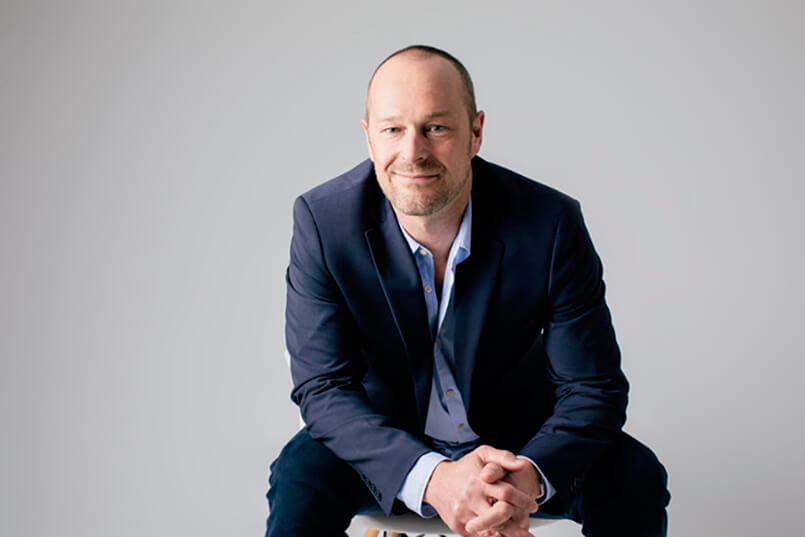
Jon Wild shares his insights into how to create a growth engine for a business. From Pet Circle and Groupon, to Hotel Club, Unilever and O2 to name a few.
He shares why and how he distills data to discover a true insight, creates focus for competitive advantage, and rallies resources and teams to run tests successfully at scale. Across all the Ps of true marketing.
Jon emphasizes the need for simplicity in strategy, the significance of understanding unit economics, and the evolving landscape of customer engagement through personalization and effective marketing strategies.
You can listen to the podcast here:
Follow Managing Marketing on Soundcloud, Podbean, TuneIn, Stitcher, Spotify, Apple Podcast and Amazon Podcasts.
I have a throw away that line I often tell the team that all indexes are flawed, it’s just a question of how flawed yours is.
Hahahahaha… I like that.
Transcription (Edited):
Anton:
Hi, I’m Anton Buchner, Business Director at TrinityP3 Marketing Management Consultancy. Welcome to Managing Marketing, where we discuss issues and opportunities with industry thought leaders. Today, I’m talking to Jon Wild, former Chief Growth and Marketing Officer of Pet Circle. He’s a seasoned leader who has changed how brands approach marketing, having worked with Groupon, Hotel Club, Telstra, and O2. Welcome, Jon.
Jon:
Thanks so much for having me, Anton.
Anton:
For those that don’t know you, what’s your superpower in marketing?
Jon:
Growth is the core driving tenant for me. My approach is consistent across different contexts: find a simple, compelling idea from a customer insight, competitive advantage, or point of difference. Then, execute against it with focus.
I like to instrument things from every single angle—you can’t have too much data. I look for patterns and don’t follow things that aren’t giving signals. Once you have that single organisational idea and the data, you democratise that information so the whole team sees it, and then you provide autonomy for them to succeed. That’s where I’ve seen my success.
Anton:
It’s interesting because typically people start with structure, but you are saying distill data to find insights, build a strategy, and then look at how to deliver against it.
Jon:
Absolutely; structure is a function of strategy. Another superpower is “make it simple”. All great strategy dies in execution, and if your strategy is complex, it’s hard to execute.
Lessons in Placement and the Power of Brand
Anton:
Is this ability to simplify a personality trait or something you’ve developed?
Jon:
I think it’s a coping mechanism for dyslexia. I like to write in bullets, taking complex information and distilling it so I can interpret it. If you project that into teams, they rally around it because it creates a simple source of truth.
Anton:
Strategy is sacrifice; you’ve got to distill.
Jon:
Strategy for me is always about what you don’t do. Before discussing Pet Circle, I want to touch on a few key highlights that formed me.
Early in my career at Unilever, I was sent to New Zealand to launch Magnum. Everyone thought we were crazy because of the price. We put 5,000 fridges in every “dairy” (convenience store) and overnight had 20% market share. A big lesson there is that marketing isn’t just promotion; we need to embrace the four Ps. In that case, placement and distribution were the keys.
Anton:
Especially with AI today, the focus often goes to comms, so your point is really valid.
Jon:
Another highlight was O2 in the UK. We platformed the brand on a great customer insight about mobile data enabling a world of possibilities. It showed me the power of brand; customer satisfaction shot up just because they were interfacing with a new, exciting brand, even when rational metrics were static.
Then at Groupon in the US, we used data-centric logic to influence change. It’s a reminder that the argument about brand versus performance is irrelevant—you’re responsible for doing both.
The Pet Circle Journey: From Harvesting to Generating Demand
Anton:
What did you find at Pet Circle when you came in?
Jon:
It was a $70 million a year business that had done spectacularly well through harvesting demand—playing on price and search to break into an existing market. But that starts to slow as clicks get more expensive and competition increases. Customers acquired on price alone can be less sticky.
We looked at paybacks using net contribution margin (NCM)—what you make after variable costs before marketing. We used this to reconcile decisions, like adding a warehouse versus buying more stock.
Anton:
Pet Circle is online only, but do you have a subscription model?
Jon:
We have a “set and forget” delivery that is a quasi-subscription. When I joined, we relied on four vectors for growth: better supply and demand alignment, improving margins, CRM relationship management, and better delivery.
We knew a bad delivery experience had a high correlation to attrition. We are delivering 20 kilo bags, and if the pet food is late, the customer isn’t happy. We wanted to own that last mile. These foundational steps allowed us to shift from a demand-harvesting model to a demand-generation model.
In-Housing and Content Velocity
Anton:
How did you move into demand generation?
Jon:
We in-housed most of our media and creative. For example, we now run hundreds of Meta ads a week to see which ones “grip”. We create content lanes—like testimonials, price, or range—and spool up content in each.
We use early signals within days to determine what resonates and then scale that. Traditional agency models aren’t equipped for this. It was also a cultural statement that we need to build a brand and tell our story, not just acquire customers through arbitrage.
The “Gold Triangle” of Data and Personalisation
Anton:
Where is the business focused now?
Jon:
The third block is data. If I can get three pieces of information—breed, age, and weight—I can infer a ton about your pet. We call this the “gold triangle”.
We spent a year retagging our product catalogue. We had the vets do the tagging rather than category managers, who tend to “tag bomb” to appear in every search. For example, a 10-year-old Labrador likely needs glucosamine for joint issues, so we map those specific products to that customer.
This helps us shift from price-led discovery to education-led discovery. If we empower customers with advice, they buy more categories, which drives lifetime value (LTV) and gives me more scope to invest in marketing.
Measuring Brand Awareness and the Role of Bus Backs
Anton:
I’ve seen Pet Circle bus backs around Sydney—they’re quite funny. How do you approach that?
Jon:
I love bus backs. Our prompted awareness has doubled. We are learning how to pull that down into sales. We’ve found that you need a mix of mediums; we use Meta creative to translate the awareness we’ve built into real business incremental outcomes.
You have to accept that you’re going to operate in ambiguity; it’s the nature of what we do. Click-based attribution became “evil” because it created a simplistic solution for finance but caused a lot of short-termism.
Anton:
What’s one piece of gold for up-and-comers?
Jon:
Instrument everything and find the patterns that matter. Bring the finance community along as partners. Understand that marketing is art and science—storytelling and data. There is no “brand vs performance”; they are all part of the same ecosystem.
Anton:
Beautiful. Thanks for sharing your words of wisdom, Jon.
Jon:
Thanks, Anton. I really enjoyed it.