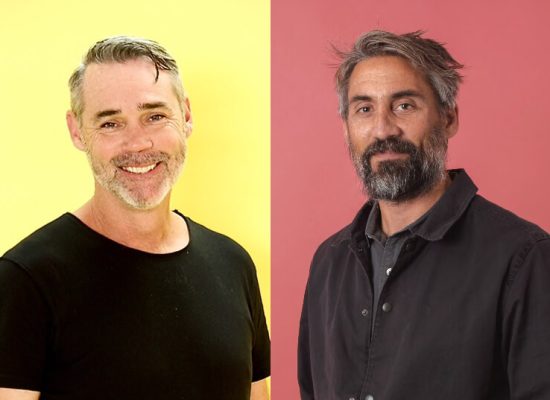

Ahron Young, founder and CEO of Ticker News, to discuss the current state of journalism, the evolution of news media, and the challenges faced by modern journalists. Ahron shares his personal journey in journalism, from his early days as a cadet journalist to becoming a foreign correspondent and eventually launching Ticker News.
The conversation delves into the impact of technology on journalism, the importance of maintaining integrity in news reporting, and the innovative approach Ticker Studio takes in creating engaging content for audiences. Ahron emphasizes the need for journalists to adapt to the changing media landscape while remaining committed to delivering credible and authentic news.
You can listen to the podcast here:
Follow Managing Marketing on Soundcloud, Podbean, TuneIn, Stitcher, Spotify, Apple Podcast and Amazon Podcasts.
The challenge is to make sure that every time I post something, no one can ever guess what my opinion is.
Transcription (Edited):
Darren:
Hi, I’m Darren Woolley, founder and CEO of Trinity P3 Marketing Management Consultancy. Welcome to Managing Marketing, a weekly podcast where we discuss the issues and opportunities facing marketing, media, and advertising with industry thought leaders and practitioners. If you’re enjoying the programme, please like, review, or share this episode to help spread the wisdom from our guests.
News journalism is under attack politically, economically, and behaviourally. Advertising budgets are moving away from traditional news media as more people access news via social media platforms, where algorithms are often designed to enrage and divide rather than inform. And yet, what makes the discipline of the news format so compelling and trustworthy? How can businesses better use this format to their advantage?
My guest today has built a career of more than 20 years, starting as a cadet journalist on Victoria’s Mornington Peninsula before broadcasting on radio and television, both here and overseas. Please welcome the founder and CEO of Ticker News and Ticker Studios, Ahron Young. Welcome, Ahron.
Ahron:
Hello, Darren. Usually, it’s the other way around; I’m interviewing you every week.
Darren:
It does feel quite awkward, as I expected you to do that introduction for yourself. You first mentioned that Rosebud was where you found the inspiration to be a journalist. Growing up on the Mornington Peninsula myself, I felt a natural affinity for that. I remember the local newspaper being delivered free each week with all the local news, like who won the netball or did well at the Red Hill show. What made you sit there and think, “I want to be a reporter that contributes to the community”?
Ahron:
I remember covering lawn bowls and photographing new mums at Rosebud Hospital every Tuesday. The day after the September 11 attacks, I had been up all night watching NBC’s coverage, yet my job as an 18-year-old cadet was to go to the hospital to take photos of newborn babies. It wasn’t necessarily that specific moment, but I’ve always loved television. There is a magic to it; it’s a huge machine where so much has to go right for it to work. It’s hugely powerful, and I love everything about it.
When I was eight, my mum moved us to a hippie commune in northern New South Wales to rebel against the mainstream. I rebelled by building a nightly news studio in my bedroom out of crepe paper and cardboard.
Darren:
That shows a true calling for journalism.
Ahron:
You’d be crazy to stay in this industry if you aren’t really into it. It’s relatively simple to enter, but hard to stay and make a career of it. Between the “bean counters” and the “Groundhog Day” nature of covering the same events, people eventually look for something more. Breaking news doesn’t happen when you’ve got a great haircut and nothing to do; it usually happens during a personal crisis when you look like hell. It attracts resilient people who can roll with the punches.
Darren:
Your career is in the 21st-century news business, which differs from the 20th century. The 20th century had a 24-hour cycle with one news bulletin and one newspaper edition a day. In the late 90s, CNN made news a constant presence, which social media has since accelerated.
Ahron:
Now it’s minute-by-minute. When I started in 2000 at a local newspaper, I had a weekly deadline. I’d write 40 stories and sit at the Dromana Magistrates Court, which was fascinating. Journalism gives you a front-row seat to history. You get to sit with a prime minister or a billionaire as if you matter, because to them, you do.
Darren:
Because you can shape how they appear to the public.
Ahron:
Correct, and that led me to Ticker.
Darren:
There’s immense pressure on news media now. The desire to be “always on” means reporters often respond to feeds rather than taking time to provide context and perspective.
Ahron:
I saw that transition while working in a radio newsroom. At 3AW, I had my first hourly deadlines. I still have recurring nightmares that the news theme is playing and I’m not in the studio. Back then, you might have an eight-hour shift to uncover a homicide or a protest. You had time to speak to people. Today, between social media and reels, it’s more like a checklist. You have to be very nimble to find time for good journalism.
Darren:
People are also talking about AI’s impact on journalism. While technology can identify trends, it will be a long time before it can provide human perspective and connection.
Ahron:
Nothing is more emotive than a breaking news story and a key interview. This morning, I watched Melinda Gates being interviewed about the Epstein files. That human connection between people regarding a big topic is something we are all addicted to; that will never change.
International Experience and Russia
Darren:
You also worked overseas. Was it the Soviet Union or Russia in those days?
Ahron:
It was Russia by the time I arrived, but our building felt split; one side felt modern and the other—the payroll side—felt like the Soviet Union. I moved to the UK in 2005 as a foreign correspondent for various Australian organisations. I saw a job ad in The Guardian for a new English-language news channel. I applied and was called for an interview at Camden Dock for a presenter role.
I did a 45-minute audition. At the end, a woman looked me in the eye and asked in a thick Russian accent, “How would you feel about living in Moscow?”. A week later, I was one of 84 foreign journalists on a plane to Moscow. Hilarity and chaos ensued for the next 12 months.
Darren:
Relocating to Russia must have given you a unique perspective.
Ahron:
My dad asked if I was crazy, but my answer to life is usually “yes”. Upon arrival, they took us to a clinic for an HIV test because foreigners weren’t allowed to live there if they were positive. I was befriended by people from the British, Canadian, and American embassies. Looking back, I wonder if they were spies, but I was too naive to think about it then. Every weekend there were parties with ambassadors and CNN presenters. When I eventually returned to Melbourne, I was very bored.
Darren:
I can imagine; it’s a smaller town by comparison.
Ahron:
It was a fascinating place. When the snow thaws after a minus 37-degree winter, they find “snowdrops”—bodies of people who fell asleep walking home from the pub. You just walk past them in spring like it’s normal.
Journalism, Truth, and “Fake News”
Darren:
What is your reaction to “fake news” and the systematic undermining of journalism’s credibility? It’s dangerous for democracy if the fourth estate is compromised.
Ahron:
This has always happened. No politician likes being questioned. Look at the censorship Keith Murdoch faced regarding Gallipoli. Governments never want to look bad. Today, government PR departments far outnumber journalists, but truth always finds a way out.
I felt uncomfortable towards the end of my time in Russia. We went there on the premise that it would be an answer to the BBC and CNN. Instead, they believed Western outlets were mouthpieces for their governments and that they should be the mouthpiece for the Kremlin. They used the “news channel” format as propaganda. They’d spend an hour criticising the West and then have a “Russia Focus” segment about pretty dogs in Siberia. These social media platforms weren’t created to enhance journalism; they were created to get eyeballs. The crazier you are, the more people watch. Building a brand on credibility in that environment is a challenge.
Darren:
A real journalist listens to the response and asks follow-up questions to dig deeper, rather than just performing a script. That is the difference between a presenter and a journalist.
Ahron:
Another threat is “activist journalists” who join organisations solely to push an opinion. This allows people to think everything is “fake news” because they witness patterns of bias. Journalists essentially become brands barracking for one side, which damages the reputation of reporting as being straight down the line.
Darren:
How do you maintain that balance?
Ahron:
I’m just a “pain in the ass”. My job isn’t to choose a side; it’s to hold up a mirror and ask tricky questions. For example, in Israel last year on a sponsored trip, the ministry was presenting on sustainability. I asked if the tanks and explosions in Gaza went towards or against their net-zero goals. You want to be cheekily honest and blunt when you have access.
The Launch and Evolution of Ticker
Darren:
What led you to launch Ticker News? You’ve brought a specific news focus to this content outlet.
Ahron:
In 2002, I created a radio news service called Como Network News, selling bulletins to regional stations. I eventually got a job at 3AW because I was a thorn in their side. For a long time, billionaires controlled media because you needed satellites and towers.
When the NBN was announced, I realised streaming meant you could build your own network. I loved using technology to bypass satellite trucks. In 2019, I saw the success of Cheddar in the US, a business news network for the “post-cable” world. We launched Ticker with a Facebook Live from a coworking space on August 19, 2019. It has been tough, but the joy of evolving has served us well.
Darren:
It has since evolved into Ticker Studio. What’s the thinking there?
Ahron:
We realised that building a business based on passive 30-second commercials is not where the industry is heading. Since we didn’t have the investment for a subscription model, we made it a free product.
When we launched, I was inundated with emails from PRs. They needed a news environment for their clients that wasn’t as difficult to access as The Today Show. We created a “third way”—a win-win where viewers get free content that is interesting but never feels like a sales pitch, even if there is a commercial sponsor.
Journalism vs. Content Creation
Darren:
Journalism is about asking the questions the audience is thinking. The news format reeks of credibility if executed properly.
Ahron:
I’m very careful. I spend most of my day putting the news together, and that is paid for by the small percentage of time where people buy their clips. We don’t charge people for interviews. Ticker is like a television version of LinkedIn. It’s a place where you can show what you do in an authoritative position.
Darren:
You have to be careful that people aren’t blatantly lying, as that would ruin the Ticker brand.
Ahron:
We do 20 interviews a day. Every morning, I receive an auto-generated email detailing every topic and guest background. I choose who I want to interview. I don’t want someone coming on to say the sky is green; it would ruin the reputation of everyone else. We celebrate business leaders doing magnificent things. If an interview feels like a sales pitch, I stop and say we need to do it again.
Darren:
You physically see audiences walk out when someone does a 25-minute sales pitch at industry events.
Ahron:
We work with clients to make them experts in their field. We have several commercial programmes where we record four episodes a month. By the time the guest gets to their car, we’ve sent them the content for social media. It’s a luxury item for businesses to appear as thought leaders, and many have seen a significant increase in sales because of it.
Darren:
Personally, I like the intellectual banter; you’re not just memorising lines.
Ahron:
My job is to be a connector between you and the audience. It has to be fun, but the audience still has to learn something.
Darren:
For any business leader looking to share their knowledge with credibility, what is the best way to engage with you?
Ahron:
We are a safe place for brands because we don’t take a political viewpoint. We listen to what the client wants and bring them into our guardrails. We like to have a “Mercedes Benz look with a Mazda engine”—reliable and high-quality but not high-maintenance. Our set design and graphics are professional grade, but we remain nimble and fast.
Darren:
Ahron, thank you for sharing today.
Ahron:
If anyone wants to get in touch, they can find me on LinkedIn or email me at ahron@tickernews.com. I’m just someone who likes making fun TV.
Darren:
One last question: who is the one person you’ve interviewed that most shocked you?