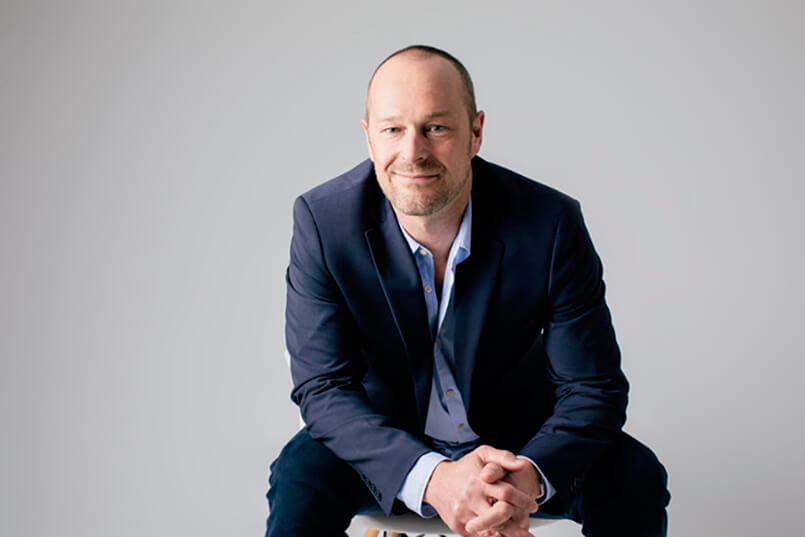
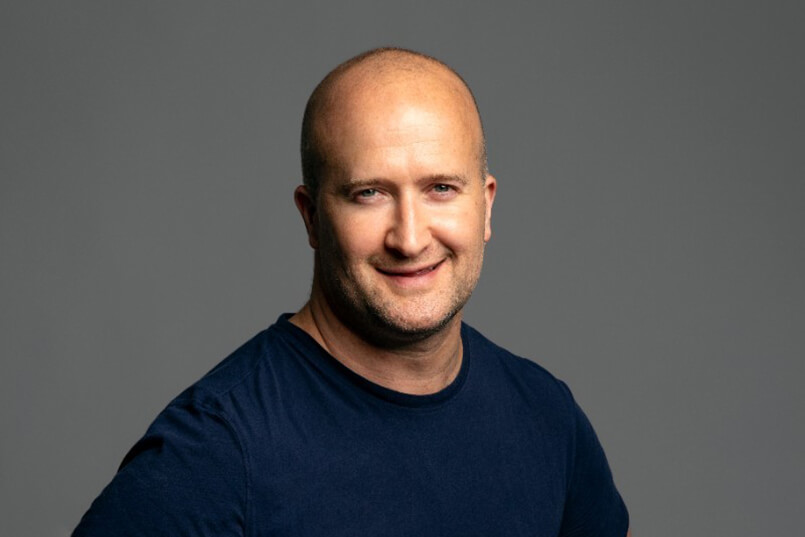
Dan Ferguson brings commercial rigour to any CMO role, with deep expertise in launching and growing e-commerce sales. He has helped transform Adore Beauty, Power Club, Vistaprint and OfficeWorks, amongst others, and is a Board advisor with Preezie and NORA (the National Online Retailers Association).
Dan shares his entrepreneurial wisdom and creativity in a conversation that delves into the importance of leveraging data to gain a competitive edge in the market. He emphasises the role of understanding the total addressable market (TAM) and how businesses can utilise data to make informed decisions that set them apart from competitors.
You can listen to the podcast here:
Follow Managing Marketing on Soundcloud, Podbean, TuneIn, Stitcher, Spotify, Apple Podcast and Amazon Podcasts.
“We saw that you hovered for three seconds over this. Then you moved your cursor erratically. You came from this source. And over the last five years, these are all the times you’ve visited”.
Transcription (Edited):
Anton Buchner:
Hi, I’m Anton Buchner, Business Director at Trinity P3 Marketing Management Consultancy. Welcome to Managing Marketing, where we discuss the issues and opportunities facing marketing with industry thought leaders. Today, I’m talking with a marketing guru, Dan Ferguson. He brings commercial rigor to any CMO role, with deep expertise in launching and growing e-commerce sales. Dan’s helped transform brands like Adore Beauty, Power Club, Vista Print, and Officeworks. He’s also a board advisor with Prezi and the National Online Retailers Association (NORA). Dan, it’s a great pleasure to delve in and find out how you deliver the numbers. Welcome to the podcast.
Dan Ferguson:
Brilliant, wow, what a roll up. Thanks, Anton, I really appreciate you inviting me on. I’m looking forward to the discussion today.
From Psychology to Commercial Impact
Anton Buchner:
We are kindred spirits—like-minded souls when it comes to numbers, numbers, numbers. At Trinity P3, we’re all about commercial value and the rigor around what marketing delivers. That’s your passion too. I was a maths guy from school, but what’s your background, and how did you get into the commercial side?
Dan Ferguson:
I had a sliding doors moment. I did honors in psychology and was going to go into either psychology practice or an ad agency. The ad agency won.
I learned that I have to make an impact. I chose e-commerce and digital because it’s very measurable, sometimes misleadingly so. I need to take action and then get it measured so that it confirms I’ve had an impact. That story of my life—action, impact, measurability—is how I reassure myself that I’m creating value.
Anton Buchner:
E-commerce was the boon, as you could suddenly scale up quickly and get results. If you can close the loop to a sale and, ultimately, a customer lifetime value, that’s the proof. Give us a summary of your career and how you pitched that commercial value to leadership teams and boards.
Dan Ferguson:
I started in advertising, and my sole client was Dell Computer almost 25 years ago. They were already doing significant business online. In Australia, that was like looking ten years into the future. I was in marketing, but it felt different—I was installing trackable codes to work out how much money we made and what drove it.
I became addicted to the measurability and the democratic nature of impact. If you can think of a wild way to make commercial impact, and it’s measurable, you have the license to do it, particularly if you use a test-and-invest approach.
One of my philosophies is: don’t spend all your time trying to cover your gaps or inherent weaknesses, because you’ll only ever be mediocre at those things. Spend your time doubling down on the things you’re already great at because you have a chance of being brilliant at those. For me, that was being creative and having a measurable impact. I also loved the disruption. As I got wiser, I wanted to change things for the better.
I launched online for quite a few large Australian retailers, like Officeworks and Myer, and was the disruptor within those companies. I had to articulate business cases in front of the board: “This is what you’re missing out on. Why? How much money? How soon? In what tranches?” This fight for change meant my grounding in marketing was always very commercial.
The Adore Beauty Experience
Anton Buchner:
You’ve touched on psychology—the idea of changing behavior is a big theme. But if it doesn’t have commercial rigor, it’s useless. What took you to Adore Beauty, and what was the opportunity?
Dan Ferguson:
I knew the founders of Adore for some time because the Australian e-commerce startup scene was small and supportive. As their business grew, my skills in US-style e-commerce practices coincided with their need to scale their Australian beauty business. I got the chance to add my commercial and marketing skills to an already great team. The growth during my seven-and-a-half-year tenure was fantastic, and the multiples before I started were just as impressive.
Anton Buchner:
For our global audience, what is Adore Beauty?
Dan Ferguson:
Adore Beauty is Australia’s largest online pure-play beauty retailer, selling over 300 different brands. It has a fantastic reputation for authenticity and pioneered things like podcasting for beauty retail in Australia, gaining a significant audience.
Anton Buchner:
During your time, they often used the phrase “beauty done better.” From an insider’s view, what did that mean, and how did you make the customer experience more effective?
Dan Ferguson:
That phrase was important during the significant growth stages. It comes back to the idea of purposeful disruption. Beauty is aesthetic and aspirational, but some of it can feel inaccessible—like you’re standing outside a cool nightclub. There was an instinctive push towards making it accessible, authentic, and a little bit cheeky. It was about helping people make good choices and avoid an endless graveyard of products in their bathroom cabinet.
Weaponizing Data: LTV and CAC
Anton Buchner:
Let’s discuss weaponizing numbers and commercial rigor. Where was your laser focus to help them shift gears?
Dan Ferguson:
Often, companies treat data and analytics like a butler that brings in reports. That helps marketing, as you can understand the customer, tenure, and categories. But to help the business take market share and do truly outstanding things, you must identify how data is used daily to power actions different from competitors. This gives you a lens to see things they can’t.
A key example is understanding CAC (Customer Acquisition Cost) and LTV (Customer Lifetime Value) very early in a marketing investment cycle.
Instead of looking back, you must be able to predict: “This customer, on average, will spend $522.” That allows me to invest upfront, spending money to acquire based on that LTV. If your competitors are only looking at the first sale, you’re playing a different ball game. You can acquire and then spend all your time growing the LTV to make the acquisition even more effective and efficient.
You must codify this LTV focus across the business—it’s not a guess; it’s the context for how we spend (or save) money. Data needs a purpose; analytics needs an application.
Anton Buchner:
We see this missed opportunity repeatedly. The acquisition team focuses only on driving CAC down, and the retention team is off looking at LTV, and they aren’t connected. It’s obvious they have to be connected.
Dan Ferguson:
Exactly. The next thing you focus on is: how often do they shop, and what correlates with more frequent shopping? That leads to more engagement, which is great, but over time, the cost to constantly reach those customers goes up. You have to ask: How do you reach your customers constantly without paying for it? This leads to ideas around content and engaging media.
Creative Engagement and the Role of AI
Anton Buchner:
Let’s get creative. What are some examples of content or experiences you’ve used to cement customers?
Dan Ferguson:
Podcasting was a great example. The key to innovation is not just doing something different, but measuring it differently, too. If you only look at last-click attribution from links in the show notes, you’ll conclude the podcast is failing. You need to look at whether the featured products move the needle, the sheer size of the audience, and the impact on your direct and owned channels.
The original podcast concept had one beauty expert and one person who was less expert but genuinely enthusiastic. That combination created chemistry and engagement because most people aren’t beauty experts. It helped them navigate the daunting choices and “social do’s and don’ts” of beauty.
Anton Buchner:
What are your views on the application of AI, particularly for generative content?
Dan Ferguson:
We are in a phase where marketers are comfortable saying, “AI can save us money. It can increase the output of content of a pretty average quality, and it can do laborious tasks.”
There’s much less application of the idea that AI can transform the shopping experience into a discovery experience that can inspire or challenge me. That’s the exciting bit that is yet to come. The social application of technology always takes much longer than the actual core tech itself, and the beginning stages are always about cost savings.
If a customer is sharing data about themselves (their erratic cursor movements, five years of visit history, etc.), and in return, they receive a truly relevant, cost-efficient, money-saving, or “life-accreting” sale or commercial exchange, I think there will be an appetite for it. The data should combine to make truly transformational shopping experiences.
Anton Buchner:
Do you think that level of experience will engender loyalty? Is loyalty dead?
Dan Ferguson:
Loyalty will continue to exist where you continue to win your consumers’ trust and next purchase consideration. It’s not a set-and-forget; it’s not a binary state. You have to keep reconfiguring how you offer value and meet the customer’s needs to maintain loyalty. That loyalty limbo bar is ever-dropping.
Anton Buchner:
Dan, you’re a risk-taker, entrepreneurial, and unafraid of failing. Thank you for sharing your gems and wisdom with us.
Dan Ferguson:
Thank you, Anton. It was great to chat. And you can hold me accountable!
Anton Buchner:
I’ll assess your business case. Appreciate your sharing of wisdom. Look forward to catching up again. One more question before you go: What is the last thing you bought online?