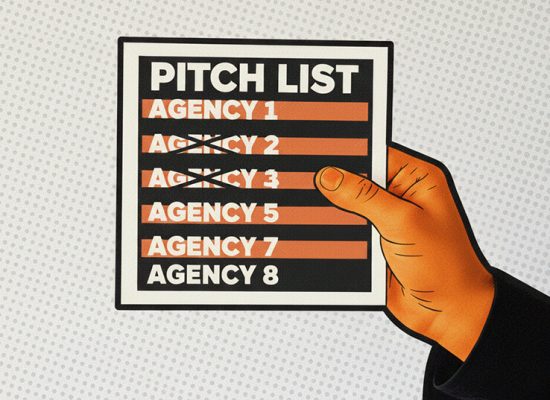

The hunt for the perfect marketing agency—a partner capable of transforming your brand, driving market share, and delivering measurable results—is one of the most critical decisions a marketing or procurement team will make. A poor choice can lead to wasted budgets, missed opportunities, and stalled growth. Conversely, the right agency can be a true force multiplier.
But how do you even begin to build that initial consideration list, the handful of agencies you’ll invite to tender? For decades, marketers and procurement professionals have relied on a medley of tried-and-true, albeit often laborious, methods. In this post, we’ll dissect these traditional approaches, examining their strengths, weaknesses, and the significant toll they can take on your time, effort, and resources. Then, we’ll introduce and make a compelling argument for the paradigm shift offered by TrinityP3’s AI-enabled Agency Search, comparing it head-to-head with the status quo across key metrics like time, cost, accuracy, and the crucial element of finding specialist fit.
The Traditional Agency Search: A Deep Dive into the Status Quo
Let’s break down the conventional avenues for generating an agency consideration list, often a blend of the following:
1. Market Research & Landscape Mapping (The Manual Deep Dive)
This category encompasses proactive, independent research to identify potential agencies.
| Method | Time & Effort | Accuracy & Scope |
| Search Directories/Databases | High Effort: Sifting through thousands of profiles, manually verifying claims. | Limited Scope: Accuracy is variable, dependent on agency self-reporting; often misses smaller, niche players. |
| Industry Awards & Publications | Moderate Effort: Focused reading, but requires cross-referencing to find relevant fit. | Low Accuracy for Fit: Focuses on past creative excellence, not current operational fit or commercial capability. |
| Competitor & Peer Analysis | Low Effort: Quick check on rivals’ rosters. | Limited Scope: Prone to conflicts; gives a narrow view of what’s possible in the market. |
- Resource Requirements: Demands dedicated, expensive internal staff time, potentially weeks of research.
- Challenges: Information Overload and the difficulty of comparing ‘apples to apples’ based on often superficial or outdated data.
2. Industry Network & Word-of-Mouth (The Referral Game)
Leveraging personal and professional connections for recommendations.
| Method | Time & Effort | Accuracy & Scope |
| Peer Recommendations | Low Initial Effort: A quick phone call or email. | High Subjectivity: Based on one person’s past experience; excellent for chemistry but poor for objective, technical fit. |
| Agency Scouting/Events | High Effort: Requires significant travel and time away from the desk. | Limited Scope: Only exposes you to agencies that actively court new business at events. |
- Resource Requirements: Relies heavily on individual team members’ networks; loss of staff means loss of crucial knowledge.
- Challenges: Limited Pool and Bias. You only hear about the ‘usual suspects’ or agencies known to a small group, resulting in a homogenous list and missed specialist opportunities.
3. Formal Procurement Processes (EOI/RFI)
Structured, systematic methods driven primarily by Procurement to achieve compliance.
| Method | Time & Effort | Accuracy & Scope |
| Request for Information (RFI) / Expression of Interest (EOI) | High Effort: Designing the RFI, managing the inevitable high volume of submissions, and manually scoring responses. | High Compliance: Excellent for confirming financials and legal requirements, but poor at evaluating nuanced strategic or creative capability. |
| Published Open Tender/Public Notice | Very High Effort: Massive administrative burden of managing and replying to all enquiries. | Maximum Scope: Attracts the widest possible pool, but this means a deluge of irrelevant submissions. |
- Resource Requirements: Demands significant administrative time and effort from both Procurement and Marketing.
- Challenges: Administrative Burden and the risk of the process feeling overly transactional, which can alienate top-tier creative agencies.
The New Paradigm: TrinityP3’s AI-Enabled Agency Search
TrinityP3’s AI-enabled Agency Search revolutionises the initial phase of the tender process. It works by processing the full scope of requirements—from mandatory technical skills to desired cultural values—against the largest and most dynamic database of agency information in markets like Australia and globally.
1. Casting the Net Wide (Especially in Markets like Australia)
In a market like Australia, which has a vibrant ecosystem of independent and network agencies, traditional search methods constantly overlook outstanding small to mid-sized specialists.
- AI Advantage: The AI is not constrained by geographic visibility or personal network limits. It doesn’t care if the best agency for ‘B2B content marketing with a focus on sustainable manufacturing’ is based in a regional hub or an international capital; it simply finds the data that proves their capability. This ensures you’re casting the net as wide as possible to capture those hidden gems and true experts that your competitors might miss.
2. Pinpoint Accuracy: Finding Specialist Skills and Values
This is where the AI proves its true value over simple keyword searching. Marketers and Procurement today need more than just a ‘Creative Agency’; they need a partner with deep, specific capabilities that align with their brand’s purpose.
- Specialist Skills: You can search for an agency with a track record in ‘App Development for Pharma’ or ‘Media Buying for Hyper-Local Retail Campaigns in a specific territory’. The AI ranks agencies not just on what they claim to do, but on detailed, verified data on staff expertise, client rosters, and proprietary technology.
- Values & Culture: Beyond skills, the AI can filter for softer, yet crucial, criteria. Looking for an agency with a specific commitment to Diversity & Inclusion or Sustainability? The AI processes this qualitative data to ensure your recommended shortlist aligns with your corporate values, ensuring better cultural chemistry from day one.
Why the AI-Enabled Search Wins the Race
The comparison below highlights the strategic value of moving from resource-heavy human trawling to intelligent, data-driven sourcing.
| Feature/Metric | Traditional Methods | TrinityP3 AI Agency Search |
| Time to Shortlist | Weeks to Months | Hours to Days |
| Resource Cost | High (Internal staff time + subscriptions) | Low (Service fee only; massive reduction in internal effort) |
| Accuracy of Fit | Variable & Subjective (Prone to bias and outdated data) | High & Objective (Data-driven, weighted matching of granular criteria) |
| Scope of Search | Limited by network and visibility (the ‘usual suspects’) | Global/Full Market Coverage (Captures niche specialists and independents) |
| Identifying Specialist Skills | Difficult, relies on self-reported data or specific network knowledge. | Pinpoint Precision: Matches based on detailed capability, not just broad titles. |
The Critical Role of the Human Element: AI Doesn’t Replace You, It Empowers You
It is crucial to understand that the TrinityP3 AI Agency Search is a screening tool, not a final decision-maker. The human element remains central to the entire process:
- Human Input is Paramount: The process starts with you. The TrinityP3 consultants work with your team to precisely define and weight the technical, commercial, and cultural criteria—the crucial human intelligence that drives the AI’s search logic.
- The AI Delivers the Best-Fit List: The platform processes the data and presents a meticulously curated list of recommended best-fit agencies. This list is not a mandate; it is a powerful, objective shortlist that has eliminated the vast majority of unqualified agencies that would have otherwise cluttered your process.
- The Marketer Makes the Final Choice: Once you have the AI-generated list, the human work of chemistry assessment begins. Marketers and Procurement can then invite these pre-vetted agencies to an initial meeting or a full tender, confident that every agency on the list meets the mandatories and has the proven capabilities. It is in these face-to-face meetings, through reviewing strategic responses, and in assessing cultural alignment, that the human judgement of the marketer and procurement team takes over to select the ideal partner.
The AI simply removes the soul-destroying and ineffective manual labour, allowing your internal teams to focus their valuable time and energy where it matters most: on the crucial, high-value human interaction that determines if a partnership will truly thrive.
By embracing TrinityP3’s AI Agency Search, you’re not automating your decision; you are optimising your opportunity. You are leveraging technology to ensure that when you finally sit down to meet your prospective partners, you are meeting the absolute best, most relevant, and most capable agencies the market has to offer.
Ready to find the perfect specialist agency without the wasted time, effort, and resources of a traditional search?