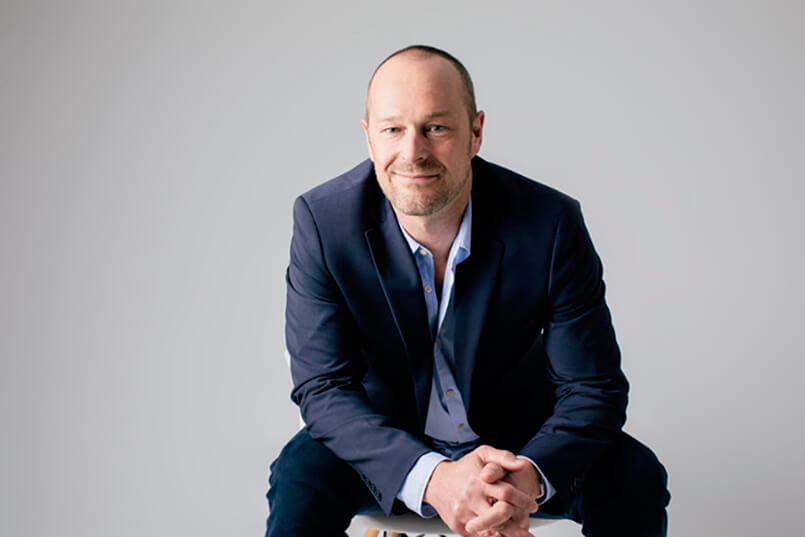
John Minty has more than two decades of agency operational experience as a CFO and COO, both in the US and Australia, for many of the major agency brands.
In the 21st century, the advertising agency landscape is rapidly changing. In-housing of agency functions by marketers, the impact of AI, particularly on production, the role of procurement on agency fees, the inability of the industry fee model to maintain and reward value, the associated rise of the independent agencies and the consolidation and transformation of the holding companies are all having significant impacts on the agency business model.
He discusses the evolving landscape of advertising agencies, emphasising the need for bravery, transformation, and a shift in operational practices.
John explores the importance of defining agency performance beyond traditional metrics, the impact of pricing models, and the necessity of fostering a culture of togetherness and experimentation. The conversation highlights the critical role of people in agency success and the need for all levels of staff to engage in operational change.
You can listen to the podcast here:
Follow Managing Marketing on Soundcloud, Podbean, TuneIn, Stitcher, Spotify, Apple Podcast and Amazon Podcasts.
I would be accused of being overly nostalgic, but the times where there weren’t phones and knocking on someone’s door and having to face someone’s parents and asking whether Billy can play.
Transcription (Edited):
Darren Woolley:
Hi, I’m Darren Woolley, founder and CEO of Trinity P3 Marketing Management Consultancy and welcome to Managing Marketing, a weekly podcast where we discuss the issues and opportunities facing marketing, media and advertising with industry thought leaders and practitioners.
If you’re enjoying the Managing Marketing podcast, please like, review or share this episode to help spread the wisdom from our guests each week.
The advertising agency landscape is rapidly changing in the 21st century. Major impacts on the agency business model include in-housing of agency functions by marketers, the role of procurement on agency fees, the impact of AI, particularly on production, the rise of independent agencies, and the consolidation of holding companies. These factors, along with the industry fee model’s inability to maintain and reward value, are causing significant disruption and rapid change.
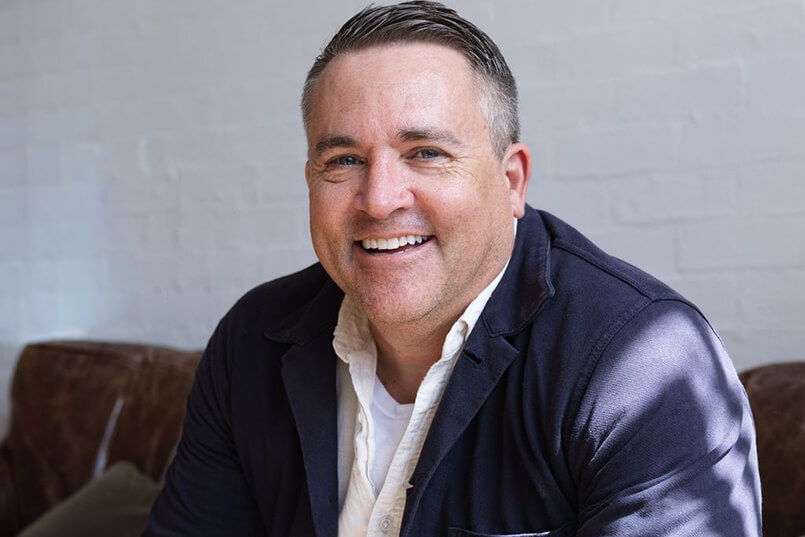
My guest today is Senior Consultant at Trinity P3, John Minty, who has over two decades of agency operational experience as a CFO and COO across major agency brands in the US and Australia. Welcome, John.
John Minty:
Thank you, Darren, how are you?
The Challenge of Agency Conservatism
Darren Woolley:
It certainly feels like if you’re running, owning, or working in an agency, it is interesting times. There is the sense of being battered from every direction, but also opportunities are being missed.
John Minty:
I think that’s right. Disruption is met with disruption, and there is the opportunity. The agencies that actually practice bravery are the ones that can win.
Darren Woolley:
Even though creative agencies talk a lot about creativity and innovation, they can be quite conservative in practice.
John Minty:
Very, yes, very. Agencies often default to accepting conventions in almost everything they do. This applies across what we call the four P’s: People, Product, Price, and Performance. We tend to default to what we know—how we price, think about talent, define performance, and how our product evolves. In my view, agencies are either defaulting to what they know or following someone else.
Darren Woolley:
I’ve seen exciting new startups come out of network agencies, determined to be totally different, only to fall back on old habits within three to six months. They often excuse this by saying, “It’s just so hard,” or “The clients prefer it this way”. Is the issue internal, or is it fighting the market, since many marketers prefer simple head hour fees, retainers, or project fees?
John Minty:
You must constantly remind yourself you are in the business of transformation, both for the client and internally. We fall into the trap of these conventions because we find it very hard to say no to a client or to third-party influences that drive how we operate.
Pricing and Operational Disruption
John Minty:
Take pricing: clients sometimes demand a certain way, or it’s the highway. However, this is not always the case; it’s often more about education and working toward a bespoke model, as pricing should be a unique proposition for a unique business problem.
Another example is staffing. We are almost exclusively full-time staffing, driven by capacity rather than capability, or a conscious decision to be more flexible. We are constantly trying to retrofit these industry conventions. This is where the concept of operational disruption is prominent. It is a discipline we tend to ignore, even as we work with clients to transform their brands. If we keep using the same tools, we celebrate the conventions.
Darren Woolley:
I’ve observed a mentality where a retainer is less a business-to-business model and more a marketer wanting to outsource a specific team. The conversation often focuses on individual salaries, multipliers, billable hours, and utilization rates. It feels like the marketer is subcontracting resources rather than buying a package deal. Marketers should be careful about dictating who is on their business; they should buy a solution delivered by a team.
John Minty:
I rarely see a retainer conversation that is anything other than an extension of the client’s team. This is a deep-seated problem, as the retainer becomes an extension of the marketing team. Consequently, 40% to 50% of retainers are spent on project management, account management, and people managing the people doing the work.
It is sad to see the collective client decline in willingness to pay for strategy. Strategy is often given away as part of the pitch process, and agencies price based on retainers or project fees. Strategy time often equals zero once the business is won, and by the time strategy is needed the following year, budgets have shrunk. This is a talent issue as well.
The Four P’s: Performance
Darren Woolley:
Let’s discuss the four P’s: Performance, Pricing, People, and Product. Agencies have traditionally defined performance as winning business, holding onto it, and making money. Is there a better definition of high performance?
John Minty:
Performance has two sides: agency performance and the performance of our work in the market.
- Agency Performance: We tend to define agency performance by the margins we make and try to standardize them. The constant race to a “fair margin” is likely the wrong conversation. The magic of an agency is telling its unique story. If agencies were truly unique, why would they need to pitch? CMOs would simply wake up and say, “I need agency XYZ”. Agency performance is defined by its unique promise in the market and its delivery, not just its numbers or margin. Agency performance is about considering the long term, not just short-term sugar hits.
- Work Performance: The impact of our work in the market is the second part. The connection between the other three P’s makes our work more impactful. However, we rarely measure it because the industry has been commoditized. We can’t afford to measure impact unless we change how we hire, structure, price, and talk about our product.
Darren Woolley:
The industry is obsessed with measuring performance through awards like Agency of the Year, creative awards, EFFIEs, and various power lists. But many of these measures are more about publicity than actual performance.
John Minty:
EFFIEs are the closest measure. If we don’t change the convention of how we measure, nothing will change for agencies. The cost of entry to start an agency is low, making it easy to find a modicum of success quickly. I believe we don’t try hard enough or invest enough time in pricing, which is the catalyst for measuring performance and finding the energy to measure our impact. Our typical contracts have a 90-day termination clause, which means agencies are just trying to stay above water. We lack the commercial and creative confidence to push hard enough for performance. Agencies, especially networks, will take the certainty of a retainer over a wholly variable outcome. Change is made in the connection between the P’s, not in focusing on subjects in isolation.
Pricing and Fair Market Value
Darren Woolley:
Pricing has evolved from the media commission model, which left agencies “flush with cash.” When commissions disappeared, some embraced the billable hours model, like accountants and lawyers. From a creative point of view, billable hours are questionable, as a great idea doesn’t depend on time spent at a desk.
We are slowly seeing a move away from hourly rates toward pricing based on outputs, deliverables, and even outcomes (payment by results). This has been slow because agencies feel more comfortable working on a cost-recovery model.
John Minty:
This brings people and performance into the pricing conversation. If an agency had a more flexible work environment (how it structures and hires), it would mitigate the need to cover so much cost. Our pricing is influenced by how we define performance, particularly the obsession with cost coverage and profitability on everything, regardless of the outcome.
I prefer outputs to outcomes. Outcomes often involve an agency tossing up a bonus idea to celebrate a pricing gap. I prefer to be experts in pricing for fair market value, which is not often where we start. Pricing for outputs is not the same as pricing for fair market value; we need to determine the value relationship between different-priced projects.
Darren Woolley:
I shared an experience where a client’s procurement team was keen on a traditional head hour retainer, but two agencies returned with output-based pricing, which “freaked out” procurement because they used a flawed rate benchmarking model. I argued that a Tier 1 agency for major campaigns should be paid above benchmark.
We discussed where to invest: seeking efficiencies in high-volume production components but using those savings to invest in the core idea, similar to the automotive industry’s approach to prototypes. The obstacle to having these conversations is conventions, and perhaps the players in the room. Procurement is motivated by measuring a reduction in cost. Marketers and non-CFO/COO agency executives should be in those conversations.
John Minty:
This is where operational disruption starts. The operational conventions are the most damaging and need the most bravery. Operations are often ignored and where we tend not to invest. If an agency were known as the most innovative operational agency, they would be very good at it. Most agency investments (from pencils to pitch costs, pro bono, and salary increases) have negative or neutral returns. There is still a lot of money available; it’s just occupied in conventional operations.
The obsession with cost coverage and profitability is compounded by the demand that every single account must deliver a certain margin, particularly with quarterly reporting. Comparing agencies’ low multiples to consulting firms’ higher multiples is not useful. The only connection is perception: clients view consultants as superior. Creative people in agencies are highly sensitive to criticism, which is the irony and the beauty of agencies, but this sensitivity costs us money because we are so fearful of conversations that reflect personally.
Product and Measured Experimentation
Darren Woolley:
When you talk about Product, it covers the agency’s positioning, reputation, and how they engage with clients, including the things an agency does “when no one’s watching,” which I would call culture.
John Minty:
I like the idea of a natural answer to why an agency is right for a certain business problem. Agencies need to become the natural answer to the job to be done. A truly unique agency product is a unique proposition that solves business problems in a unique way, leading to a unique outcome and better results than competitors.
Darren Woolley:
Some agencies position themselves with a line like, “We make brands famous,” but none of their behind-the-scenes actions align with that, demonstrating the “cobbler’s shoes” syndrome.
John Minty:
You cannot do what you profess you want to do without breaking conventions. If the goal is to make brands famous, they must constantly invest in things ahead of the curve, but instead, they invest in the same things as other agencies. You need to break conventions and behave uniquely even “when no one is watching.” My fear is that we are no longer looking for operational answers.
Darren Woolley:
Is this what you mean by measured experimentation? Agencies should be constantly looking for ways to experiment, not just doing the client’s ordered work.
John Minty:
Yes, measured experimentation means breaking things, making mistakes, and celebrating those mistakes. If we don’t take swings, we have no excuse other than to be like everybody else. Measured experimentation is obsessing over where you’re investing profits and client revenue. Good agencies’ margins are a byproduct of doing something else, which is a philosophy that allows for experimentation. We continue to raise salaries and invest in things like pro bono at the cost of investing in our own intellectual property or new ways of pricing. The obsession with being profitable on every account is a fool’s errand.
People and Togetherness
Darren Woolley:
The biggest asset of any agency is the People. Flexibility is important, which is more than just an in-office or work-from-home dichotomy.
John Minty:
Staffing is a huge cost, with 60% to 70% of revenue dedicated to it. We tend to follow conventions: when someone resigns, we immediately look for a replacement because the current pricing models dictate that the person “has to be replaced” to justify the fee.
I would compare “togetherness versus working from home”. The “art of the long lunch” is gone, but that is togetherness, and it doesn’t have to be in an office. The point is the impromptu moments, the spontaneity, the stimuli that come from being around other creative people. When you aren’t together, collaboration is difficult. I would rather build a destination where people want to be out of “love for humanity, the love for culture, the love for creativity and collaboration.”
Darren Woolley:
Responding to disruption through cultural, operational, and process change requires people to work on that together. Missing this togetherness means missing the opportunity to drive change.
Driving Operational Change
Darren Woolley:
For an agency tired of being disrupted and feeling commoditized, what is the first thing they should change?
John Minty:
I would suggest they step back and understand the connection between the four P’s. They should spend time understanding:
- How and who is connecting their activities from a performance perspective.
- How they are measuring performance and their work’s impact in the market.
- How performance connects to people, product, and pricing.
If you focus on one P, the more you scratch, the more you see how those things have to connect. Do not focus on pricing without considering the impact on the business overall.
Darren Woolley:
What if you’re not in a key operational role? How do you engage the leaders?
John Minty:
Every single person in an agency, from the janitor to the CEO, touches one, if not multiple, of those four P references. If meaningful change is limited to just the top executives, they likely don’t understand their role. Everyone is working across the interaction of the P’s.
The idea around disruption is the ability to ask the question. Deciding consciously that nothing needs changing is very different from omitting to ask the question in the first place. It is a matter of asking, “Do I need to disrupt this convention?” Every decision, directly or indirectly, has to live in service of the desired outcome. A curious person can ask these questions, but should do the work before asking the question publicly.
Darren Woolley:
John Minty, this has been a terrific conversation. Thanks for making the time and having the chat.
John Minty:
Not at all, it’s been a pleasure. Thank you, Darren.
Darren Woolley:
One last question before you go, and that is, in your vast experience, what period and which agency do you think got it most right?