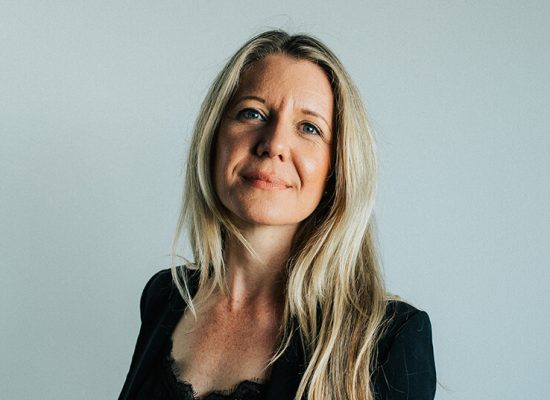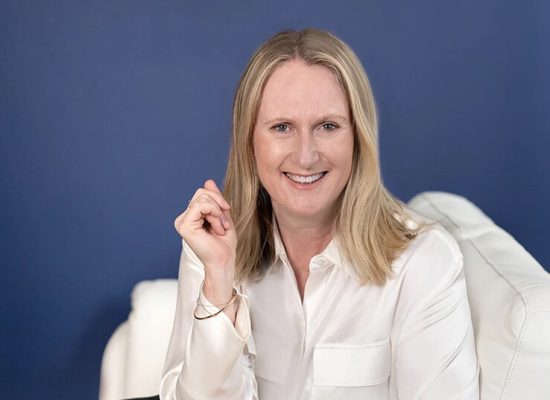

Christian Jacobsen, Founder and Managing Partner, and Damien Eley, Founder and Chief Creative Officer of agency The Many, join Darren to discuss why modern marketing needs an operating philosophy built around how culture actually works, rather than how agencies organise themselves.
The traditional categories of creative, media, social, and experiential were built for legacy campaign models, but modern audiences experience brands as one fluid ecosystem. As artificial intelligence commoditises persuasion and accelerates execution, the real differentiator for brands is shifting toward human participation, community, and co-creation.
The conversation explores why persuasion is becoming automated, how live and experiential activations provide proof of humanity in a synthetic world, and why the agency of the future must operate like a flywheel rather than a leaky funnel. They also discuss why exceptional creative judgment and taste matter more than ever when technology makes “average” dramatically easier to achieve.
You can listen to the podcast here:
Follow Managing Marketing on Soundcloud, Podbean, TuneIn, Stitcher, Spotify, Apple Podcast and Amazon Podcasts.
A campaign is finite, it’s got one message, it’s going in one direction.
And it’s expensive.
Transcription (Edited):
Darren Woolley
Hi, I’m Darren Woolley, founder and CEO of Trinity P3 Marketing Management Consultancy, and welcome to Managing Marketing, a weekly podcast where we discuss the issues and opportunities facing marketing, media, and advertising with industry thought leaders and practitioners. If you’re enjoying the Managing Marketing podcast, please like, review, or share this episode to help spread the wisdom from our guests each week.
Traditional agency structures were built around distinct department silos: creative, media, social, and experiential. But modern consumers don’t experience brands through internal agency department lines. They experience ideas, entertainment products, and communities as one fluid ecosystem. At the same time, as artificial intelligence rapidly commoditizes persuasion and automates execution, the true differentiator for brands is shifting towards human participation, belonging, and co-creation. In a world where machines will win persuasion, how must agencies and brands evolve to build around how culture actually works?
To explore why participation trumps persuasion and how to build ideas around active human engagement, please welcome to the Managing Marketing Podcast, the founder and managing partner of Agency The Many, Christian Jacobsen. Welcome, Christian.
Christian Jacobsen
Thank you. It is a pleasure to be with you today.
Darren Woolley
And the founder and chief creative officer, Damien Eley. Hi Damien.
Damien Eley
G’day Darren. Thank you for having us.
Darren Woolley
So, the first thing is I’ve introduced The Many as an agency. How does it feel to immediately get pigeonholed into one of those silos as an agency?
Christian Jacobsen
Well, I think there are many faces of agencies these days; it’s a pretty broad-spanning title. People have been asking us since we founded our company a long time ago—when it was called Mistress—are you an agency? We’ve always said yes. We do a lot of the traditional work that you might see, but we’ve always lived a little bit outside of that and pushed into new media and new spaces. It’s still agency work, but sometimes it might be seen as outside the traditional norms.
Damien Eley
We’ve got a page in our creds deck that says we are named after the people who decide whether any of it worked, which I think is a great way to describe The Many.
Darren Woolley
It also infers this idea that there are many different ways to engage with people. When we were initially introduced, Damien, I thought the name had a simplicity, but if you thought about it even for a few seconds, it seemed to allude to something more.
It’s interesting because marketers find a real convenience with pigeonholes and silos, being able to say, “This is my media agency, and this is my creative, and this group does social”. But there’s also this desire to collapse them all into one, and yet even when that happens, we still end up with silos within the agency. How do you guys actually overcome that? Is it radical collaboration?
Christian Jacobsen
Internally, first let me just address that it’s only natural for human beings to want to put things in silos. When the brain tries to handle complex situations, we usually break them down and compartmentalize. When you think about all the myriad ways to go to market these days and the different tactics deployed in our industry, you can understand why it’s easier for a CMO to say, “Okay, this is my brand agency, or my social agency”. It just seems to simplify the process.
However, as you noted before, it’s not how culture works. It’s not how humans interact with content and experiences. We’ve always believed that the responsibility of companies like ours is to help clients navigate into these new spaces and get closer to how humans actually use media and engage with ideas. That starts to blur the lines.
It’s never easy because so many of the internal silos you’re referring to are from an older era—an era with a slower media-oriented space and very specific roles. But we’re working at a very different tempo these days, and clients are expecting many more deliverables. It is a challenge internally, but people can wear many hats. With new tools out there, people are becoming more empowered to do things. We see a lot of multi-talented people who can do many things, and that’s of great value these days because it expedites the entire process instead of acting like an old car assembly line.
Darren Woolley
Damien, do you think it’s also because as an industry, whenever new opportunities or channels come along—like digital or experiential—we just bolt them onto the core advertising offering? It never seems to start from asking, “Where is the human being in this?”.
Damien Eley
I think we’ve always just tried to start with the problem before deciding how we should answer it. When we started the business in LA, it gave us the opportunity to pull from so many people around us. Coming back and starting the company in Australia, there are still a number of amazing specialist agencies here. Every agency says it can do a bit of everything, but what gave us confidence very early on was explicitly not having that complete, rigid structure. It was really about assembling the right team for the right project, and that carried on to the philosophy of The Many.
Darren Woolley
Because it’s not just capability; the business model is often built around selling a particular solution. If you’ve got a media capability, you’re going to push paid media. How much of these silos are actually driven by the underlying business model of how to make money out of it?
Damien Eley
Probably way too many. I think these days clients are really looking for somebody who can confidently show them the right path to take.
Christian Jacobsen
I would just add that the traditional business model is really well known. Companies become very efficient at it, and therefore it becomes the preferable approach. That efficiency is highly incentivized in an industry like advertising, where timetables, margins, and client budgets have all compressed while deliverables have increased.
The reality is so much of that institutional knowledge is from an older era. Exploring new models—like tapping into creator networks or co-creation—is a challenge because it’s a totally different approach and you’re constantly pioneering it. We’re going through an era right now where even time-based compensation is going to be severely challenged because holding companies are deploying so much technology that it makes no more sense. It’s going to be fascinating to see how this develops over the next few years.
The Shift from Persuasion to Participation
Darren Woolley
There are different types of marketers: those that have a very clear idea of what they want an agency to do, and break it down into component parts, and those that come with a well-defined problem and are open to solutions. I imagine you guys are much more aligned to the latter?
Christian Jacobsen
We prefer it. Anybody in this industry loves to think creatively beyond just the idea, but even how to get to that solution. When it’s more open, it enables the agency to innovate and experiment.
However, we do both. Sometimes you’ve got to manage both sides. For instance, we work with a large QSR client. That paradigm of how we go to market and measure the funnel works, so there’s something really reliable about it. But alongside that, they’re looking to engage younger consumers and tap into new media. This is where they open things up and ask us to connect with people in totally different ways.
Damien Eley
A client may want to go in a certain direction because they’re comfortable or because the business feels it’s too risky to think differently. Our philosophy is that we’ll always answer the client brief, but there’s always a lot of work going on in the background on how we can introduce something they haven’t expected.
Darren Woolley
As technologies become a bigger part of the marketing process, consumers are becoming less human and more digital—just numbers and impressions on a page. How do we move from just trying to get someone’s attention by interrupting what they really want, and move them into participation?
Damien Eley
As an industry, we’ve probably spent sixty or seventy years pouring everything into persuasion. But as a human, would you prefer to be persuaded, or would you prefer to participate in something you enjoy doing? It seems simple to say, but it’s a fundamental shift in how you have to think. Because persuasion is becoming automated and completely out of our hands, the pressure to find ways to actively participate on a human level has become more important than ever before.
Darren Woolley
I can’t believe how good LLMs are at writing the call to action. They are shameless. In English and Australian culture, we’re inclined to dampen it down, but an LLM will write, “Sign up now, or we’re coming around to beat your door down”.
Christian Jacobsen
They’ve been trained on all of this history and all of these past campaigns. Marketing is becoming hyper-personalized, and eventually, it will go agent-to-agent and become completely dehumanized. My personal AI agent is going to negotiate with a brand’s AI agent to buy my shirts for me.
When we think about participation, we realize it’s true to human origins. For 99% of our existence, we lived in tribes where everybody had to participate to be a part of the group. This gave us our sense of purpose, identity, and belonging. The algorithms have been pushing toward deeper engagement, and younger generations have grown up with this. Gen Z consumers see themselves as co-creative directors who expect to impact brands.
When the machines become more hyper-personalized, we have to ask: how do we maintain that human engagement? Let’s invite them in. If they are doing something with that brand, they’re going to have a deeper connection.
Damien Eley
We actually include a provocation in our creative briefs: consider the participatory nature of the idea. It forces you out of thinking in a formulaic way to deliver something persuasive, and instead makes you think about how to actually participate with the audience. It’s a fundamental shift.
Navigating the AI Era and the Value of Human Connection
Darren Woolley
As a father of twin Gen Alphas, I see how they’re the first generation born with screens. Their cerebral cortex gets overloaded, but what they ultimately crave is human connection. They want authenticity and interaction. Technology hasn’t replaced that primal need for connection; it’s actually driving a growing need for it.
Christian Jacobsen
One hundred percent. With any major macro trend, there’s always going to be a counter-trend. Nothing is going to stop the advancements in technology globally right now, but human interaction—a genuine one-to-one connection—is going to become more important.
We have a creative mantra in the office: If we wouldn’t share it, we don’t want to make it. We have to put aside our advertising selves, embrace our humanity, and look at how we personally consume media. What annoys us? What do we share? If we make the work we want to engage with, it’s going to work.
Darren Woolley
Damien, we’ve seen this backlash to AI content because of its synthetic, lazy nature. From a creative point of view, how do you distinguish between AI enhancing participation and it just being a lazy way to get the job done?
Damien Eley
It all depends on the outcome. You have to use the tools and move with the pace of the industry, but if what you’re doing is causing a reaction for someone to turn up, contribute, play, or join a community, that proves you can have a real relationship between a person and a brand. If you’re eliciting a participatory response, the work transcends the tools used to make it.
Darren Woolley
Since Cannes this year, everyone is talking about how “taste” is the new required skill for a creative. But I asked ChatGPT what my taste as an aging creative hipster should be, and it told me exactly what books to read and music to listen to. Isn’t keeping yourself grounded in authenticity more important?
Damien Eley I
read that trend as taste being a uniquely human thing. If you’re provoking yourself to work out what your taste is, that’s something no machine can generate on your behalf. The backlash is going to come from the recognition that to be human, you have to have proof of humanity—the version of you that AI cannot create.
Evolving the Creative Process and Relinquishing Brand Control
Darren Woolley
Does this participatory approach change the structure of a campaign? Many marketers say they want to break the old pattern of starting with a TV ad and then building the rest of the campaign around it.
Christian Jacobsen
Sometimes there is a role to start with TV, simply because the average age of a CMO is 52. Gen X grew up in a different era, and sometimes the fastest way for them to wrap their head around an idea is through a script because that’s what they’re trained for. However, they are also very aware that younger generations are communicating and interacting with media in totally different ways.
Regarding AI, we see it as the ability to get closer to your ideas faster. Instead of a creative director wasting time while a studio comps things up and changes the original vision, people are now empowered to build out their own vision immediately. Instead of disappearing for a month and creating anxiety for the client, we can have a much more iterative process, bringing them in early and getting to solutions faster. I’m an optimist in this space; I think it’s an incredible creative era.
Darren Woolley
It raises interesting unforeseen issues, though. Some agencies are virtually presenting AI-generated work that looks finished, only to realize later they don’t have the copyright to run it, and the final result looks totally different.
But Damien, what do you mean by finding opportunities for participation? Is it just running a sales promotion with a coupon?
Damien Eley
It means talking to the human on the other side. The younger the audience, the more they expect a level of participation with the creators they follow. Our process asks you to step out of traditional formats and figure out how to genuinely participate with them.
Darren Woolley
What’s the difference between user-generated content (UGC), content creators, and influencers?
Christian Jacobsen
We started with UGC years ago, moved into the influencer space, and then influencers became content creators. They’re all degrees of tapping into a third party on behalf of the brand. The difference is that creators and UGC are much more active and participant-driven than a pure influencer just doing an ad mention. The brand is intentionally giving up some of its control to get extra reach and authenticity. People trust creators more than they trust brands and advertising because creators have nurtured that audience and have their best interests at heart.
Darren Woolley
As a creative person, coming to terms with giving up that control can be tough. Too often, “brand management” acts like brand dictatorship. But the best we can do is try to influence and shape the brand in people’s minds.
Christian Jacobsen
If you’re inviting somebody in and you want to give them a sense of agency, you have to have some open loops and opportunities for them to do something. In the past, brand books were strict and prescriptive because a small group of people controlled a one-way message. Today, people are taking things, remixing them, and making their own versions. I believe you need to be open in your brand guidelines because people are willing to help you build the brand right now. If everything is too controlled and defined, it’s closed off—they can’t enter your brand.
The Power of the Participatory Flywheel
Darren Woolley
This reminds me of the difference between word-of-mouth and influencer marketing. We’re seeing a trend toward using micro-creators to spark brand participation rather than relying on one massive celebrity endorsement.
Christian Jacobsen
That’s exactly how the algorithms work now. They’ve been tuned to respond to participatory actions. If someone shares or remixes content, the algorithm promotes it. The industry is embracing micro-creators because they have a real sense of community, leading to a lot more authentic interaction than a broad post from someone like Kim Kardashian.
Darren Woolley
This fundamentally shifts the traditional linear sales funnel into what you guys call the flywheel.
Christian Jacobsen
Correct. Flywheels compound over time. A funnel is like a giant sieve where you just dump money into the top to get a transaction at the bottom, often using a rented audience. A flywheel works differently—because people are doing something on your behalf, it perpetuates on its own. It takes longer to get going, but it’s much more durable and efficient.
A simple way to think about it is a campaign versus a conversation. A campaign is finite with one direction and one message. A conversation starts with a provocation, people join in, and it compounds and expands beyond what you imagined, picking up momentum.
Darren Woolley
I love the metaphor of momentum. We often undervalue how much harder it is to get something stationary moving again compared to nurturing existing momentum.
Looking Ahead
Darren Woolley
We have unfortunately run out of time, but I really want to thank you both for joining me. I wish you the best with the expansion into Australia, Damien, and Christian, this has been a terrific conversation that gave me a very different view on the true interpretation of participation.
Damien Eley
Christian’s book is about to come out, so we’ll get you the definitive guide to participation soon.
Darren Woolley
What is the title so we can look out for it?
Christian Jacobsen
It’s called Wired to Participate. It starts with the neuroscience, traces the history of advertising, and looks into the future.
Damien Eley
Thank you so much for the opportunity to chat, Darren.
Darren Woolley
My pleasure. Now a question before we go. what’s your favorite thing to participate in?