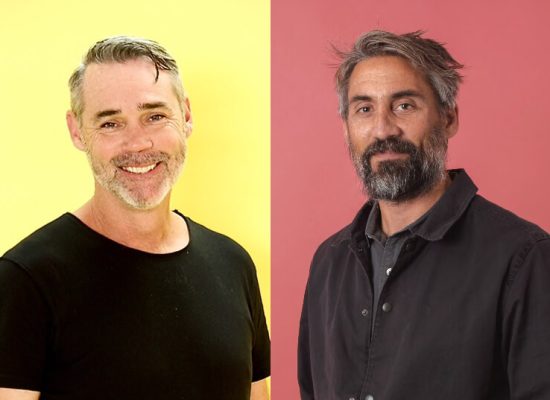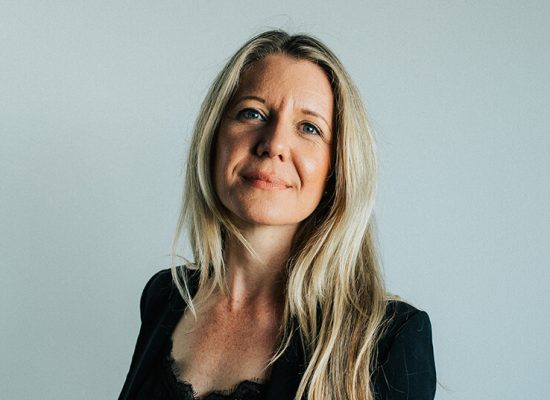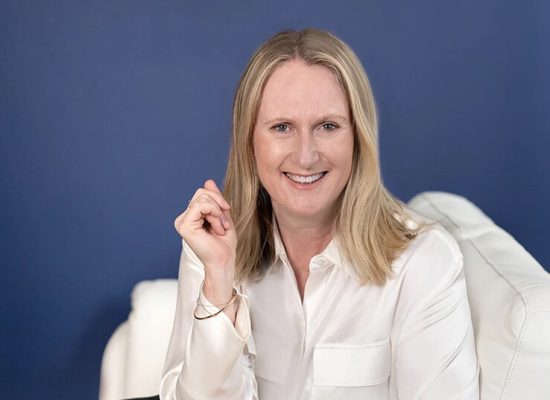

June Cheung is head of JAPAC at Scope 3, a Public Benefit Corporation that focuses on decarbonizing media and advertising by providing a platform to visualize, measure, and reduce carbon emissions across the advertising ecosystem. But it is more than that.
June shares the evolution of Scope3 from its foundation in 2022, with the aim of helping the advertising industry reduce its carbon footprint, to facilitating the creation of an agreed measurement model for the industry, to building and sharing emission reduction solutions to today, with the recent announcement of the creation of an agentic AI platform to help partners build and sell AI-enabled media products that are efficient and sustainable by design.
You can listen to the podcast here:
Follow Managing Marketing on Soundcloud, Podbean, TuneIn, Stitcher, Spotify, Apple Podcast and Amazon Podcasts.
As a market, as an ecosystem, the opportunity is right there. I think this is so exciting for the ad tech ecosystem, for the marketing ecosystem, of that pivotal change.
Transcription:
Darren:
Hi, I’m Darren Woolley, Founder and CEO of TrinityP3 Marketing Management Consultancy, and welcome to Managing Marketing, a weekly podcast where we discuss the issues and opportunities facing marketing, media, and advertising with industry thought leaders and practitioners.
If you enjoy the Managing Marketing Podcast, please like, review, or share this episode to help spread the word and wisdom of our guests each week.
When discussing greenhouse gas emissions, we refer to three different categories that organizations measure to understand their environmental impact.
Scope 1 are emissions that are directly owned or controlled from the sources.
Scope 2 are indirect emissions from the generation and purchase of electricity, heating, and cooling that’s then consumed by the organization.
And scope 3 emissions include all the other indirect emissions that occur in the company’s value chain, both upstream and downstream.
Now, scope 3 is not to be confused with Scope3, the Public Benefit Corporation that focuses on decarbonizing media and advertising by providing a platform to visualize, measure, and reduce carbon emissions across the advertising ecosystem. But actually, Scope3 is much more than that.
Now, to discuss what Scope3 does and why, please welcome to the Managing Marketing Podcast, the Head of JAPAC (I guess it’s JAPAC at Scope3), June Cheung. Welcome, June.
June:
Thank you, Darren. Thank you for the intro. So excited to be here to have a chat with you.
Darren:
Well, look first of all, it is Japan, Asia Pacific?
June:
Correct. Correct, yes.
Darren:
Oh, good. I would just want to check that, because I wonder why they feel the need to add Japan in.
June:
I think because Japan is such a unique market.
Darren:
That is true.
June:
So, currently, we’re established in Australia. We invested in Southeast Asia last year, and we’re exploring opening up the office in Japan. And they’re very distinct. I think you can call it APAC, but you want to operate in Japan, you need a very different system.
Darren:
In fact, one of the things that always amazes me is marketers from North America and Europe that have not operated in APAC before are inclined to think of it as generally quite amorphous. And you can tell by the way they talk about it. And yet in some cuts, people include the subcontinent.
So, you’ve got India and China, the two largest populations in the world, and then you’ve got all these smaller countries — but smaller, I mean, Indonesia is almost, I think 300 million or heading towards 400 million.
This is a huge group of populations, quite diverse in culture, quite diverse in their economic development, and quite diverse in their approach to and the way they live their lives. It’s a really interesting area, particularly when we’re talking about a topic that actually impacts all humans on planet Earth, and that is the global climate crisis, isn’t it?
June:
Yeah, absolutely. And I think thinking from a Scope3 perspective, we are very lucky that from day one, we’ve been a very global business. We invested in Australia, the JAPAC region very early on. But it is a big ground to cover, and where we can, we try to invest in local expertise to tackle the nuance of the market.
I like to give a big shout out to our executive leadership team, our product team, who are always thinking about the language capabilities we need to do for this market. And also, the market nuance on where different markets are at.
Australia very early on was/is into sustainability. We have mandatory (yeah, the smirking) climate reporting, but we also have agencies that have come forward and actually like announced it and go, “We want to do …” they’ve said they want to do something.
Darren:
Look, I’m only smirking because first of all scope 3 was founded in 2022. So, in some ways you have the advantage in you are coming into the market as if it’s a green field. And to be able to set that global perspective, particularly with a focus on Asia Pacific, I think is really important and really smart, to your point.
I think it’s interesting though because the journey is from my perspective, has started way back at the start of this century in 2000 when … you’re right, even back then, there was lots of discussion and lots of intention.
Australia introduced the first carbon tax back then, but one of the things that brought it all undone was the economic necessity of the global recession. Suddenly, it was more important to not go into recession and sacrifice the environment again.
And it’s interesting how there’s this balance that occurs in all economies. And still is occurring today as we get closer and closer to a very critical juncture from the climate crisis point of view. Some citers put us over 1.5 degrees, and say we’ll be lucky to keep it to two degrees, which is potentially catastrophic.
June:
Yeah, and when I read that, my heart just goes like, ugh. But then I think what’s within our control and what we can do. And I think us relatively young business is only three years in, and I kind of sleep at night to go, how much have you done in three years? So, in the last three years, became-
Darren:
You’ve achieved a lot, you have achieved a lot.
June:
Yeah. And let me think about … some of them, right? So, you think in order for us to agree to reduce emissions, we need to be measuring apples to apples. And imagining getting an industry of marketers, agencies, publishers, and vendors aligned to how we measure it.
Darren:
It was a Gordian knot that virtually had no solution. How do you actually bring those parties together?
June:
So, we started, and we’ve made a very early decision early on, even though where emissions measurement and looking at ways to reduce in media advertising, the way we did it, our methodology was open source and transparent.
We very quickly involved the industry. So, it’s not just Scope3 measuring it in a black box. I think that’s fundamental to our value. Transparency is key and is still what we do today. We got everyone together to go, “This is too important to argue. This is too important to measure in different ways and say, I do it better than this person. We need to come together and agree.”
So, we partnered with WFA, Ad Net Zero has now taken the reins to create the global media sustainability framework. Basically, it’s a framework to agree: what are the boundaries? A to D, where do we start, what do we measure? And also, the formulas and the data that goes into it.
So, I was on the call this week, it looks like we’ll be available for all channels by June this year with the industry standard. So, we can measure. I think that’s something to celebrate.
Darren:
So, one of the things I love about this, and it’s the antithesis of the way the industry usually works, is that you haven’t allowed perfect to stand in the way of progress.
Too often we see industry initiatives that just get stalled because everyone wants the perfect methodology. But it’s more important to get an agreed methodology that everyone buys into. Because you can always refine it and tweak it once it’s working.
So, no wonder with that type of mentality, you can move relatively quickly compared to a lot of the other approaches that people take.
June:
And not just go through our business, the industry. Like we need to bring everyone else along with us on the journey. And that’s why you see Scope3 provide a lot of education, and we go into the weeds, into the details of what we do.
Darren:
Now, you started out obviously, 2022. That was the big obstacle. First of all, we need a way of measuring. If we’re going to reduce, we need to know where we are now. The next big stage, I guess, was then helping each of those groups, publishers, brands, marketers, and agencies work out where are the opportunities in their carbon footprint, wasn’t it? And what did you do there?
June:
Absolutely. I think there’s two main approaches. For you and me sitting in the room who passionately care about sustainability, who’s trying to bring the industry forward, you reach out to those passion for you first. They’re willing to take the plunge, they’ve been sitting doing their personal life, or they’ve been looking at 1.5 degrees, it’s going to be too warm, what can we do?
And in our day-to-day job, we have this intersection between our media expertise and sustainability, and the opportunity to drive change. So, we recruited the agencies, the brands, the publishers who are leaned in to go with us on the journey. And we’re pioneering to places we’ve never been before.
So, we’re measuring for the first time, we’re talking to each other, working out kinks, disagreeing, arguing, should we do this? Do not include, and now, it’s part of the industry, but it’s getting those select individual passionate for you to do it first.
The second phase is those are a handful or those are the echelons.
Darren:
They’re your thought leaders and your passionate champions.
June:
What about the rest? The rest in a-
Darren:
Oh, because it’s all too hard, June. Why are we doing this? It’s hard enough doing business as it is. Why are we-
June:
Yeah, and what’s in it for us? I think what’s really unique about-
Darren:
What’s in it for me?
June:
What’s in it for me or for my business? So, from Scope3 … from the very start, sustainability is a core. You mentioned we’re a full public benefit company, but also, we speak the commercial language of the area that we’re trying to change, how can we make it more efficient for you?
No one says no to making the media buying better. No publisher says no to making more money, capturing market share, and no brands goes, “Oh, well, I don’t want to waste my media dollars.” So, using commercial language, I think that’s very important if we want to drive rapid change as fast as possible.
Darren:
The thing that I find interesting is that you did that three-pronged approach into brands and marketers, agencies and publishers. And I know a lot of conversations I’ve had over the years, agencies have always said, “We’ll move in that direction when the brands, when our clients ask for it.” And publishers will go, “Well, yeah, if they start asking.”
And then the brands are going, “Well, it’s not really on our agenda at the moment. And what’s the impact it’s going to have on the way we do …” So, it was this circle that was very hard from my conversations to really work out how to break that. Was there a particular area you started?
June:
I’ll tell you a story. I’ll mention a few stories in this conversation. So, when we first started, we worked very closely with the World Federation of Advertisers. They actually have a-
Darren:
Stephan Loerke.
June:
Yes, who have-
Darren:
He’s very passionate about this-
June:
Very passionate. And he actually has a program for CMOs to sign off to a Planet Pledge. I pledge to whatever I can do to make media buying or the way I operate as a business more sustainable from a marketing perspective.
So, our co-founders, Brian O’Kelley and Anne Coghlan actually stood in front of the room of 50 CMOs at a global conference one day. And we mentioned, “We’re Scope3, we’ve just started, we are ad tech expertise with a passion of sustainability, and we see an unsustainable or complex media supply chain that can be improved. And our theory is when you remove high carbon sites from your media buy, you can significantly reduce the mission in your advertising.” The CMOs looked at the two and said, “Prove it.”
Darren:
Yeah.
June:
Prove it. Like they didn’t say, “Yes, we’re part of Planet Pledge, we’re going to do it.” They said, “Prove it.” So, however, in that room, there was five brands willing to put their hands up: financial, FMCG, no-
Darren:
Cross category.
June:
Cross category, and-
Darren:
And big advertisers. There’s no small advertisers in the WFA, let’s be honest. They’re all big global advertisers.
June:
And every single one of them, we went through the journey of cascading through the different stakeholders, measuring the emissions and where they’re buying media. And we found areas to reduce significantly between 30 to 50%. And also-
Darren:
Which is a big saving.
June:
And have no impact on CPM or improvement on CPM.
Darren:
Yeah. Because there’s a fact flying around and that is that the advertising industry contributes the same amount of greenhouse gas or more than the aviation industry each year. Have you heard that one?
June:
That is a fact, and I would like to use this opportunity to clarify it.
So, there is a World Economic Forum report that says data centers contribute 2.5% of human induced carbon emissions, aviation is 2.1. So, this is one report that says that, and I think a lot of people quote that derivative and say it’s comparable.
However, when you dig down the layer, that’s what Scope3 does. We go into the detail, they use kind of electricity emissions numbers that are older, like kind of without any … we need more renewable energy. But when you consider renewable energy, the numbers are probably from our perspective, and I’ve got a blog post to share with you on this — data centers is 1.2%, aviation is 2%.
Darren:
Right.
June:
So, really, they’re small numbers. When you think about sustainability, it’s coal power, transport, those are the big chunky ones. But when you come down, when you want to compare aviation to data centers, aviation is 2%, data centers is 1.2.
Darren:
Because we’ve moved to a digital media ecosystem, almost all media today is delivered electronically. And so, all of these issues around greenhouse gas emissions related to media is really about electricity.
And so, in countries or even states that have a hundred percent renewable, these numbers are actually infinitesimally small, whereas you are in a country that has high carbon load energy generation, they’re going to be incredibly high. So, the way to solve this is just to move to a hundred percent renewable.
June:
And we can kind of put a hand up as an industry, oh, don’t need to do anything, someone else is solving the problem. But for us, there’s so much more to it. If you can use ways to save energy or save where you’re spending your money — I’m just kind of talking the language of marketers once again. If you can make your dollar go further and being safe carbon, do you want to do that or not?
Darren:
And that’s the point, isn’t it? And the thing that drives me crazy is that when we have conversations around the climate crisis, people often frame this as it’s the right thing to do, but it’s more than that. It’s also the smart thing to do.
Because if you think about carbon as a measure of effort and cost, and you can reduce carbon, then you’re becoming more efficient, and you’ll be reducing costs. So, it becomes an important business metric.
And I think when the government introduced the reporting on greenhouse gas emissions (that was in January), it really made people sit up and go, this is actually an accounting issue for business, it’s not just a feel-good issue. Do you feel the same way?
June:
A hundred percent. I think when you look at the wider reason why a government or a CEO or a board cares about carbon is what does it mean for the profitability and the share price of the business. If you have a high carbon business, it’s a risk. So, I think this is stepping outside of media, but if-
Darren:
No, but it has an impact because marketing and media is part of business for a lot of businesses.
June:
Exactly. So, if I’m a bank, CBA announced last year that they’re no longer lending to fossil fuel business, because it’s a cost to their business. Like it’s represented as a carbon risk, you’re investing too much in fossil fuel business, it’s not good for the portfolio. So, yeah.
Darren:
Yeah. Anyway, yes, you’re right. We got off the media. So, I guess the conversation you would have with publishers then, is we can help you measure your current carbon footprint, identify opportunities for you to reduce that.
And then because we’re measuring it using this industry agreed approach, it has validity for the clients and agencies to then, that are looking to reduce their carbon footprint, their scope 3 carbon footprint, to actually be more inclined to choose you over someone that’s a much heavier carbon load.
June:
Yeah, absolutely. And even before Scope3 started our business, many publishers were taking steps to become more sustainable because it’s within their ethos. Kind of like we’ve met each other at a climate changes event, and you mentioned you’ve been doing this for 20 years. There are publishers out … sorry, sorry.
Darren:
I feel so old.
June:
But there are publishers out there that have been on the journey already. So, when we’ve started here in Australia, we just kind of combined our forces. So, SBS is an example. They had already been working with overseas broadcasters from a production perspective, looking at ways to reduce emissions in their production with the Albert Calculator.
So, it’s about joining forces of people who are already on that journey. And we want to encourage people to buy more sustainably because that’s how we’re going to get to our goal. It’s like in a supermarket, as long as people … people know not to buy plastic now. We need to get to the stage where people buy from publishers’ performance, but then also the sustainability side as well.
Darren:
Now, there’s a couple of platforms that you’re known for. The first one is the collaborative sustainability platform. Can you explain that? What’s the role that that plays?
June:
As a tech company, you always talk about platforms, don’t you? I want to talk about the problem we solve from a … let’s forget whatever name it is.
So, in an emissions perspective, we needed both sides. We said at the start, we need brands to tell agencies, agencies to work with publishers to reduce emissions in the supply chain. The collaborative sustainability platform is somewhere you go to, to understand as a brand, where am I investing my dollars? Where are the emissions coming from? At a granular level, to allow me to make decisions in my next media buy to reduce that without impacting on performance.
I think you’ve had other people on the podcast that talk about sustainability. And the default way to measure emissions is by dollar spend. You spend a million dollars, you get X amount of carbon. It’s a very basic number. It’s a number you can report to.
Darren:
And it’s quite convenient and it doesn’t cause any headaches for people. Because whatever my spend is, except that the only way you can reduce your carbon footprint is by actually spending less. And I don’t know a single marketer yet that is happy to have less to spend when they’ve got so much to do.
June:
Yeah. And so, Scope3, our model today, is about delivering safe, sustainable growth, because you can’t have sustainability like working against growth. We need growth in ecosystem to thrive. And I don’t think that us two sitting in a room is not going to change that, I think that the world is heading that way, but how can we do it as sustainably as possible?
So, going back to the platform, you need the platform to know where you’re spending your money, but you need the platform … it’s collaborative because publishers are also sharing their data. So, we have a framework on the industry on how we measure emissions, but the more granular we can get it, the more we can make the decisions.
And we need to create the incentive for publishers to do it. Because if I’m a publisher, why would I share my data? Keep it default, keep it the same. So, it’s the collaborative part because publishers are encouraged to share. The more accurate they are, the more reward they get from brand dollars.
Darren:
What about offsetting? Because I remember when I first got involved, everyone saw the business opportunity was offsetting, whereas best practices actually reduce first, and then the component that is either technically impossible or financially impossible to reduce, you then can look at offset to actually get to zero net.
June:
If you ask for my personal point of view, I’m always focused on how we can reduce the ecosystem. I don’t like talking about offset, it’s like a rabbit hole and it doesn’t serve the purpose anyway. I think there’s-
Darren:
It’s more like compensation, isn’t it? I have to make good for the fact that I can’t fix this bit. But why not put all your effort into getting that as small as possible before you even have to think about fixing it.
June:
You should always look at ways you can reduce and that’s where we’re going to. I think people will talk about offsets and compensation. There’s different layers to it. People go, “Yeah, I’m compensating, I’m paying for a tree, or I’m buying offsets.” There’s a lot of questionable-
Darren:
I get emails all the time: “You can buy trees and give them as gifts to your clients.” And it’s like oh-
June:
Yeah. And it’s a stat I haven’t shared for a while. I think for the U.S., the amount emissions they emit as a country, we need to cover three quarters of the planet in trees, and nowhere to live, nowhere to eat. That’s just not a viable solution. So, if you ask me personally, like I’m always going to go, what is our path for us to reduce, reduce, reduce, reduce.
Darren:
Reduce, reduce, reduce, reduce. And then if you really can’t get it to zero — and for some reason you have to be at zero, there’s your option.
June:
And then you get into-
Darren:
But be very careful because I love the fact you say it’s like a rabbit hole. It can become incredibly complicated as to whether you’re buying real offsets or fake offsets. And are they actually locking carbon up forever or are they locking it up for the life of the forest? And so on and so forth.
June:
And even when you read sustainability reports today, even the regulation allows two types of reporting. Are you just talking about your market base based on what renewable energy certificates you’ve bought in the past or what you actually use?
So, conscious, this is a broad audience, so the key message is focus on reduction on who’s actually doing the work to reduce year on year and showing you that. If people talk about I’m buying offsets, I’m compensating, I’m doing renewable energy, dig into it deeper.
Darren:
And you’ve also got some solutions around actually helping people reduce their emissions climate shield, green media products and the like.
June:
Yeah. So, Scope3 we are VC-funded, and I’ll tell you a story of kind of how it relates back to that. There’s a lot of companies out there who do carbon measurement or carbon accounting. They see it all the time. What makes Scope3 different is that, yes, we’ve got emissions model that measures carbon, but we are very focused on ways you can actually push a button and reduce.
So, when we presented ourselves to a VC company, they’re like, “Wow, this is different. You guys are saving the planet but also looking at ways to push a button and use technology to decelerate, and it’s not a compensation program.”
There’s platforms out there where you measure and then you go buy a tree, no. We are deep tech enthusiasts who understand the ecosystem, and we’ve built solutions with climate in mind to reduce.
So, all those products you mentioned, it’s about, okay, you’re trading media, where are the opportunities to buy lower media, but also feeding in a return signal, or is it performing for you or not?
Darren:
Yeah, fantastic. It’s interesting because you talk about being a technology company. I mean, you personally and Brian especially have deep, deep industry experience. I think looking at the senior team of Scope3, I feel some ways some kindredship because we always talk about TrinityP3 being poachers turn gamekeepers.
I think the same is here, that you’ve got this deep experience in building and managing ad tech and MarTech technology. And now, you are using the same knowledge back on actually making it more sustainable. It’s a really interesting motivation.
June:
Yeah, I think it’s a reason why I personally love working at Scope3. I get challenged intellectually from all my peers and how deeply they understand the ecosystem. Brian O’Kelley, our co-founder, worked at a company called AppNexus previous to that, and they literally built the system that we use in the background day to day.
We don’t think about it, but they know at a very granular, deep to the code level. Brian famously talks about how the cookie, like he wrote a little cookie, it’s named Ange after his daughter, and it’s dropped everywhere. But when you do that at such a detailed level, you can work backwards to spot, okay, where are-
Darren:
How can I use the system now?
June:
How can I use the system? And coming to today, is the system’s been the same for the last 15, 20 years, it’s time for a change. How can we change that?
Darren:
That gets us to a really good segue to the things that are happening now. You’ve had some pretty exciting announcements in the last month, which isn’t just in the last month, I believe. This is a change that’s happened, and you can’t talk about advertising and marketing without talking about AI. So, what’s the impact or what are the opportunities that have emerged for Scope3 with AI?
June:
To get to AI, I think I have to talk about our journey as a business. So, we started a sustainability focus in media measuring emissions and reducing, giving someone opportunity to activate. Then we actually got an investment to explore AI.
So, last couple of years, AI exploded globally, not just in media, but everywhere. And because we were measuring emissions in media, it was a natural extension to measure what is the impact of AI on sustainability.
Darren:
Well, it has a huge impact on energy consumption.
June:
But isn’t it interesting there was a podcast with OpenAI and the head of product, and at the end of the session they asked, “What is the sustainability impact of AI?” And his answer was, “I don’t know.” Because these companies are focused on their model, servicing the business. And that’s kind of where Scope3 comes into help kind of be a third party and measure the ecosystem.
And come towards this month, our evolution for sustainability to AI, we’ve combined the two looking at their media advertising ecosystem. We are applying our knowledge, deep knowledge of the ecosystem and AI to drive that change. And I’ve got some examples.
So, I think recently there was an AdEx report about many brands including the U.S. government serving ads next to-
Darren:
Ad safety, brand safety.
June:
Brand safety. So, for the audience, it was ads being next to child sexual abuse material which they call it CSAM. And no brands knowingly want to do that, but you talk to your brands in agency pitches all the time, everyone’s using a verification provider.
Darren:
Except that those verification providers largely operate at a URL level, and are not looking at the content. Because I was talking to one of those providers, and I was quite critical after that report came out and they go, well, for instance, they won’t allow the front page of like the Sydney Morning Herald to be seen as a safe environment because they don’t know what’s going to be on the front page. It could be something that’s seen as unsafe.
June:
So, I would love to debate this with you. So, they don’t allow homepage of Sydney Morning Herald-
Darren:
Or New York Times, or-
June:
Or New York Times-
Darren:
Or any of the major newspapers-
June:
Known major newspapers is funding journalism, but somehow, it’s allowed on this unknown site. So, I think for us … like I’ve worked in brand safety and-
Darren:
But it is that problem of working at a URL level, because anything could actually be loaded below it.
June:
Yes. Well, I think it’s more nuance to that, and that’s where we dig into it. That’s where you have to go into the detail. When you have the publisher through to the DSP that buys it, that URL goes through a lot of hops. Every hop is a risk of that URL being chopped change, cut down to a different level. So, what the buyer sees, can evaluate, might not be what the publisher send.
So, our new way of looking at scope 3 is that we’re trying to bring the signal closer to the publisher and making that decisioning closer to the publisher, so you have that full transparency rather than at the pointy buy side in.
But going to some deep … I think on stage with us, we had a publisher, Allrecipes — you would’ve seen allrecipes.com. So, we’ve been working-
Darren:
I’ve cooked a lot of those dishes.
June:
Oh, have you? Fantastic. So, her example was a page about the best dips to bring to a party. And usually, there’s a bit of a blog and they talk about these are the best dips.
In that article, there was one word, like vodka, and it was talking about bringing vodka as a party punch. Just one word in that whole article about dips. She as a publisher saw that it was blocked by a brand.
Darren:
Wow.
June:
People say that keywords, we don’t use that anymore, we use AI, all that kind of stuff, but it’s still happening. Why?
And so, what we are launching is Scope3 brand standards that approaches from a different perspective. So what’s different about it? Full transparency. All this like URL’s not being seen in that supply chain, we are making it transparent. We’re making it transparent, not just to the brand, but to the publisher as well.
So, another story I was kind of researching from a publisher perspective, like what are your challenges as a publisher when it comes to brand safety? They go, “Well, we run a campaign, and it finishes.” The brand agency goes, “Hey, 30% of your impressions were not safe.”
Darren:
Yeah.
June:
But the publisher didn’t know. They’re like well, they have that discrepancy where agency is chasing the publisher for a refund, and they weren’t given the transparency of what’s being blocked. And if what’s being blocked is really basic, blunt, single keywords, like the Allrecipes, it’s really unfair for the whole ecosystem. And so, that’s what we’re trying to solve. We are using AI-
Darren:
Because it isn’t contextual, isn’t it? Keywords are contextual, in that case of Allrecipes. It wasn’t a recipe for a vodka drink, was it?
June:
No, no. It was just one keyword. And for so long, that was what’s available technology to us as an industry. Keywords, contextual taxonomy — we put things in boxes because that’s how humans categorize and put things in boxes.
So, before that, we were taught today, this other call was talking about DeepSeek, ChatGPT, Gemini — with large language model, what’s different is that we can ingest immense amount of content, categorize it. We can tune it as a publisher, as a brand to make contextual and brand safety or brand standards better.
Darren:
It’s really interesting because I’ve noticed on social media, no one dies, you’re made unalive.
June:
What do you mean by that?
Darren:
Okay. So, a lot of the social media platforms in response to criticism about content have obviously been given a list of words that they’re going to block. One of them is things like “kill, die,” and so you see content creators saying “he unalived himself” rather than saying they committed suicide because that would be a red flag that would get their account taken down.
And it’s really interesting how these very sort of clunky single keyword techniques actually work against creating content that people probably need. It’s interesting how in the media world, content has to be classified, and there are rules around classifications.
And broadcast television at certain times, certain topics can’t be discussed, but after a certain time — and yet the argument that we get online is that there’s just too much volume. Are you saying that there’s a possibility with AI, that we’re going to be able to almost rank content in context of the topics and the subject matters, including images?
June:
Yeah, we will get there, a hundred percent.
Darren:
Not now but videos and images have always been the sort of bug bear of search engines. I think they’re still trying to work out how to create a search engine for video content, but-
June:
No, I think today, we’re starting with text base, but say we can do that. I think what’s Scope3’s doing differently is the transparency. So, going back to the start of making sure we have brands, agencies, and publishers.
In the past, it’s always like it starts with the brand, the brand made the decisioning, but the publishers did not see that. We want to do radical transparency where there’s an agent for a particular brand-
Darren:
Agentic AI.
June:
I want to use it without saying these words.
Darren:
Bingo, bingo.
June:
You said it. I’m saying I’m solving for the problem. The problem is … I know you’re laughing, but I try really hard because it’s so easy for us to throw the acronym. And for the audience, what does it mean?
Darren:
Well, it just means an AI that operates under a certain instruction or to do a certain function. It becomes your agent to do a particular function, agentic AI.
Now, the reason I brought it up was that recent media pictures, it’s become the word of the day by every agency to say, “And we’ve gotten agentic AI solution for this.”
June:
Exactly. And that’s why I try very hard to avoid the word.
Darren:
It’s okay. You’ve got a complete justification for it, June.
June:
So, the idea is you have the agent from a brand, but then the publisher can also see what the decisioning of that brand agent is, and they can kind of argue and go, “Hey, actually, I’m a bit different, et cetera.” So, that transparency, which will-
Darren:
So, it identifies it before the purchase?
June:
Yeah, or just the communication. Because another example is, I had this noted down was, okay, so imagine you’re a big bank. So, you talk about that, you mentioned that Sydney Morning Herald, brands avoiding the homepage because they don’t know. But that’s where people go. That’s where the eyeballs are.
Darren:
That’s where the news is.
June:
That’s where the news is. That’s where the real human eyeballs are at. They’re not at tipsandtricks.xyz.com. So, we have a problem where the publisher example I said was 30% of their content is just unsafe at the moment based on current standard.
If you are a bank, I’m trying to drive home loans to Australians, real Australians, who are going to the top three new sites. I’m not advertising on the homepage, that feels wrong from a journalism perspective. That feels wrong from a brand’s perspective.
And I’m doing brand standard not just as insurance, but I’m buying more quality media and getting more conversions, and that goes back to heartland of Scope3.
Darren:
Particularly for that target audience, every time the Reserve Bank of Australia meets, everyone goes to the homepage to find out what the decision was. How is my home loan reduced in price?
June:
Yes.
Darren:
No, no. Now, this is interesting though because from a Scope3 perspective, and as you’ve said, the early days, three years ago, 2022, it was very much about sustainability. But this has actually expanded the role to being about making it more sustainable and effective. Because it’s not just about — first of all, measurement is about measuring impact, but then reduction is about improving performance.
This is therefore, a natural extension of that because it’s also saying, let’s increase the opportunities by removing the barriers to choosing better media choices.
June:
It’s been a natural evolution for us. So, back into that room where we were the CMOs and we said, high carbon, remove it, reduce emissions and better performance, they said prove it. And we went through the exercise, and it was proven.
Remove the high emission sites and generally are made for advertising, they’re wasted impressions, they’re impressions that are not seen by human. So, globally, the average viewability rate is 70%. 30% of ads are not being seen. And we seem to be okay with it. We understand the ecosystem are looking ways, finding the opportunities and changing that. So, it’s like I have a fridge full of food-
Darren:
You might have to change the name.
June:
Do we have to change … in our heartland, Scope3 is supply chain emissions and we look at media. I think that’s our heartland. I think that it’s a great name. It rings true to our values, which is sustainability. It’s always like we do everything we do in AI, but we’re also thinking about is it worth the carbon?
Darren:
Okay. So, the criticism would be, but AI at the moment does add to the emissions. But are you saying it’s a cost reward calculation at the moment, backing the fact that things will only get better. Emissions will only reduce as we move to more sustainable environment.
Even DeepSeek scared the hell out of Silicon Valley because they were able to build an LLM and get it up and functioning at a fraction of the price that they were building them in the U.S. So, there is this natural move towards making things more efficient, faster, cheaper, will the same thing happen? It has to happen with media and energy.
June:
If you look at a macro level, there’s no getting away from AI, everyone’s doing it. From a Scope3 perspective, are we just going to add AI on top of existing systems and have incremental change? No. We want to drive disruptive change in how we actually do the supply chain.
Darren:
Okay, that’s interesting, building it into the existing collaborative platforms, building it into the platforms that allow marketers and their agencies to make better decisions.
June:
Going back to the brand safety example, if the Euros get manipulated throughout the supply chain, how can we be closer to supply chain, so it’s not manipulated, and to solve the problem. So, we’re solving industry problems with technology, and then the AI is the vehicle to it.
And going back to your DeepSeek example, we actually run the numbers. Running large language models on decisioning is expensive. But it’s also rapidly changing. In 2023, the cost for every ad supported page to run a lot large language model would’ve been $45 million. 18 months later, we’re down to 1 million. And then last year, DeepSeek came out, it’s about 270,000.
Darren:
Soon, it’ll be like a couple of hundred bucks.
June:
So, as a market, as an ecosystem, the opportunity is right there. I think this is so exciting for the ad tech ecosystem, for the marketing ecosystem of that pivotal change. And so, how do we harness it? How do we learn from our past mistakes? We’ve made mistakes. We’ve all made mistakes. How do we learn from them with sustainably in mind and try to change?
Darren:
And there are going to be certain brands that this is essential. This might be a nice thing to do. Brands that have very high standards of brand safety. Brands that are targeted at families with young children are targeting children (not that they’re meant to), but it’s going to be really important to be a hundred percent assured.
I feel sometimes almost like they’ve invested in these verification solutions because there’s been nothing else. And then being disappointed because it’s not perfect. But then nothing’s perfect.
June:
Nothing’s perfect-
Darren:
But it can be better.
June:
It can be better. The safest way to advertise is not to advertise at all. You’re not going to do that. But we can leverage the tools to make the ecosystem better, to have that transparency.
So, at the moment, you talk about a current brand, if I have my brand safety strategy, you pass it down to your 50 agency teams and it cascades down to a single human that adds it, exclude it, whatever.
In the agentic world, is that you plug it into your agent and that gets cascaded down. So, rapid transparency, you get that feedback loop much more faster.
Darren:
And it taps into your company value of collaboration because it’s not just about enforcement, it’s about identification sharing that with the publisher. So, the publisher can then either make changes or be aware of the things that are stopping them getting extra advertising inventory.
June:
Yeah. And the beauty with AI is the tuning. Like in the past, people would say, “Yep, give me your keyword list, we’ll help you do it.” And you kind of fingers crossed and hope for the best.
Darren:
Their white list and their keyword list and their-
June:
Correct, correct. They call it inclusion list and exclusion list now.
Darren:
Well, that’s why I didn’t mention the other side. So, inclusion, exclusion.
June:
Very good. Very good. Very good. But now with the ability to log into a platform, yes or no, there’s that transparency and I think it goes a bit big step.
Darren:
Yeah. Really exciting, very exciting. Where are we at today? It was announced just recently, there was a big press release and media coverage; what are the next steps?
June:
The next steps is kind of to our model when we started with sustainability, working with all the stakeholders together: the brands, the agencies and publishers to bring some case studies to life so that we can scale this and people can have confidence. Because when you take this to market, people are going to have to have questions.
And we want to work through that with the selected brands, publishing agencies that want to give it a go, and we’ll be very excited to show you in a few months’ time how this all works.
Darren:
Fantastic. Well, look, time’s got away from us. June, I’ve really appreciated the conversation. Thank you for taking the time and coming and updating us on what’s happening with Scope3 and the digital advertising ecosystem.
June:
You’re very welcome. I really enjoyed this chat, and I love that you’re so passionate about sustainability and giving us the opportunity to talk.
Darren:
Now, I have a question for you before we go: a lot of companies love to champion their green credentials, but if you had to choose the one you’d back, who would it be?