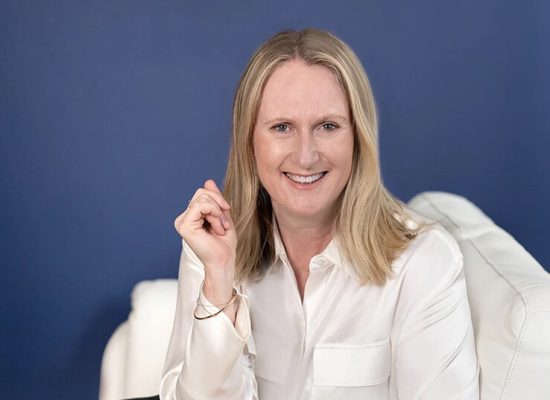

Nick Jackson is the CEO and co-founder of Artist Partners, and collaborates with Andrew Mote, the Principal and Founder of Mote Advisory on analysing and advising superannuation funds on meeting their fiduciary responsibilities when it comes to their marketing investment.
The explore the complexities of marketing within the Australian superannuation industry, focusing on regulatory scrutiny, measurement challenges, and strategic insights for marketers aiming to demonstrate member benefits and business outcomes.
For a sector that manages more than $4.13 trillion in funds, making it one of the world’s largest pension systems, and spending $482 million a year on marketing and sponsorship, this is an essential conversation to eavesdrop on.
You can listen to the podcast here:
Follow Managing Marketing on Soundcloud, Podbean, TuneIn, Stitcher, Spotify, Apple Podcast and Amazon Podcasts.
I think the marketing industry as a whole has a bit of a habit at the moment of mass generalisations.
Transcription (Edited):
Darren Woolley:
Hi, I’m Darren Woolley, founder and CEO of Trinity P3 Marketing Management Consultancy. Welcome to Managing Marketing, a weekly podcast where we discuss the issues and opportunities facing marketing, media, and advertising with industry thought leaders and practitioners.
Back in 1992, with the introduction of the Australian Superannuation Guarantee, compulsory contributions to a super fund became part of the Australian workplace. Thirty-four years later, superannuation assets in Australia have reached approximately $4.13 trillion, making it one of the world’s largest pension systems.
With Australian superannuation funds spending $482 million on marketing and sponsorship in the previous financial year, it’s no wonder that APRA, the Australian Prudential Regulation Authority, is looking at marketing expenditure to ensure it is being invested in the best interests of its members. But what does this mean for marketers in the sector and their budgets? To help us understand the implications of this scrutiny, please welcome the CEO and co-founder of Artist Partners, Nick Jackson, and his collaborator on this work, the principal and founder of Moat Advisors, Andrew Mote.
Nicholas Jackson:
Thanks Darren, nice to be here.
Andrew Mote:
Great to be here, thank you.
Darren Woolley:
They are big numbers, aren’t they? We’re talking about trillions of dollars under management and hundreds of millions spent on advertising. For the average person, super is often something that happens in the background until they approach retirement age. Andrew, how do you see the current marketplace?
Andrew Mote:
I think the categorisation into retail, industry, and the remnants of what used to be called government super is correct. There is some innovation with a fourth category around “wrapper” type products for high-net-worth individuals. Your characterisation of consolidation is also right.
We’ve had a whole cohort of Australians contributing for decades, and we are now at the stage where people are rolling out of super into retirement phases. This marks a major shift in focus:
How have we spent the money? Is it delivering those retirement outcomes?
The Best Financial Interests Duty
Darren Woolley:
Nick, from your perspective, why has marketing become such a major interest point for APRA?
Nicholas Jackson:
Fundamentally, it’s because it’s such a large portion of the funds themselves. The total marketing spend in 2025 was over half a billion dollars. With that level of spend, it justifies scrutiny. There is now an onus on marketing teams to demonstrate tangible member benefits—though even the definition of that is murky territory at the moment.
Andrew Mote:
A major regulatory shift has occurred. We used to refer to the “best interests” of the members, but this has shifted to the “best financial interests” of the members. That triggered the data collection and the subsequent focus on 14 specific funds.
If you trace the legislation back a few years to the explanatory memorandums, there is direct discussion about marketing spend. The intent of policymakers was to move away from a simple “outcomes test” toward a “purpose test.” They want to see the process you follow, ensuring it is traceable, linked to outcomes, and backed by evidence within the company.
Darren Woolley:
Superannuation is all about investment. As a marketer, you would be happy to be seen as an investment within the organisation to help with growth. But proving the return on that investment has become increasingly complex. It’s not enough to just attribute; you have to financially prove how that investment acts in the best financial interest of the members.
Nicholas Jackson:
Marketing teams are often being sold “silver bullet” solutions. For example, some are told that Marketing Mix Modelling (MMM) is the answer to all ROI questions. Similarly, attribution is often demonised for only measuring one part of a customer journey. Right now, we don’t feel marketing teams are adequately set up to answer APRA’s scrutiny, and that is something we are very focused on.
The Efficiency Challenge: Rising Costs to Acquire
Darren Woolley:
Much measurement in the industry is done by the people selling you the media—the “walled gardens.” Andrew, what should marketers be thinking about to deliver the evidence required?
Andrew Mote:
There is a disconnect across many industries—not just super—between early indicator metrics and tracing them through to business outcomes. For super, that means asking if the customer actually ended up joining and how many funds they brought in. Without that, productivity targets or continuous improvement exercises can’t be run. Marketers can now serve their CEO and CFO, as well as APRA, by doing these same things.
Nicholas Jackson:
Connecting marketing investment to commercial outcomes involves defining what a member benefit is. One benefit might be reducing the cost to acquire. Advertising investment is going up year-on-year. From 2023 to 2024, it rose from roughly $300 million to over $400 million. At the same time, the cost to acquire across the industry has also gone up. The efficiency isn’t being demonstrated in the numbers.
Andrew Mote:
The logic is that if we invest in marketing and acquire more members, we share our fixed costs over a greater number of people, thereby reducing fees. For context, in FY23, we think industry cost to acquire was around $135. In FY25, that is up to $173. There is a wide distribution within those numbers; some are performing well, while others have a huge opportunity for improvement.
Darren Woolley:
I imagine these funds are capturing this data, but perhaps it isn’t central to the marketing function?
Andrew Mote:
Historically, it’s been challenging to move from platform metrics and “opaque” metrics like brand awareness into the central databases of an organisation. That is shifting. What wasn’t possible five years ago is possible now, but it takes marketing working with business strategy and internal IT teams. You will need to show your workings down the track.
Sponsorship and Data Governance
Darren Woolley:
Nick, marketing numbers also include sponsorship, which can be incredibly difficult to connect to regulatory inquiry.
Nicholas Jackson:
I’m not going to say MMM is the only answer. Ultimately, it’s about data governance. If an organisation has a grip on every stage of the customer journey and measures things that matter—competitive acquisition costs, retention, and lifetime value—then experiments in sponsorship can be validated. Right now, marketing costs are rising alongside acquisition costs, which suggests that continuous improvement isn’t being observed at a total industry level.
Darren Woolley:
You’d expect that if someone asked to prove the return, there would be a move toward “last-click attribution” or “performance media”—the irony being the implication that it’s the only media that performs. This is dangerous because it only accounts for the very last part of consideration.
Andrew Mote:
It shows up in the data. For example, Aware Super is spending high levels relative to its peers. Their acquisition is relatively low, so their cost to acquire is quite high—over $500 compared to AustralianSuper, which runs closer to $80. However, Aware Super and HESTA have churn rates around 8–9%, which is lower than some of their peers. One in five of Aware Super’s customers is a “switcher,” a discerning customer. Unscrambling that egg is complex, and we help companies work through those nuances.
Bridging the Internal Divide
Darren Woolley:
This isn’t just a marketing issue; it’s a business issue. You can no longer think of marketing as the “colouring-in” department. It has to be as integrated as the investments team.
Nicholas Jackson:
Good marketing is just good business. If you take a holistic view, what is a business other than product, promotion, price, and place? We called ourselves Artist Partners because we want to marry instinct with data and science. That mix of art and science, or logic and intuition, is what will enable teams in an AI-driven future.
Andrew Mote:
I’ve been in heated discussions between marketing and the rest of the organisation. I’m not sure how it ended up so adversarial. Every organisation has a product or strategy person who wants to help you work out whether to spend a dollar on retaining a customer versus attracting a new one. Trust them and work with them. That partnership can open up IT and help you work through regulatory questions from APRA.
Darren Woolley:
Often, organisations have a “marketing department” that is really just a promotions arm. Pricing, product, and distribution happen elsewhere. Anyone who has studied marketing knows those levers need to be worked in concert. Misalignment occurs when those four ‘Ps’ are disconnected. We need a culture of “safe inquiry” where marketers don’t feel they have to protect their budget just because it’s the first thing cut in a downturn.
Nicholas Jackson:
Marketers are currently sitting at a confluence of forces:
APRA pressure, the digitisation of platforms, and the arrival of AI. They are wondering which way to go. Our advice is to first get a grip on connecting investment to member outcomes. Point solutions aren’t enough. We propose that each marketing organisation build a “measurement spine” that integrates metrics that matter to understand how investment is influencing them. It’s not easy work, but it’s necessary.
Signal Design and the Measurement Spine
Darren Woolley:
Andrew, how do you operationalise that measurement process?
Andrew Mote:
Get on the same page about the “metrics that matter.” You have to sit down as a leadership team and admit if you can’t currently measure these things deeply. Bring in IT, analytics, and strategy to map out how systems talk to each other. This isn’t about cutting the budget; it’s about saying, “From that same $30 million next year, we want to get another 3% of customers.”
Nicholas Jackson:
The solution is different for every organisation based on maturity. You must look at your data maturity. Many organisations only have data that partially explains what happened. You cannot get to predictive modelling without quality data at the beginning.
Darren Woolley:
Within superannuation, there is a lot of data about how everyone else is performing that you could use. The more data you have, the better the econometric model. As George Box said, “All models are flawed, some are useful.”
Nicholas Jackson:
We use the term “signal design.” It relates to metrics that matter, but also asks:
what signals do we need to surface to explain what happened? It might be engagement levels—how many members open emails, for instance. Signal design isn’t just for data scientists; it’s for creative marketers to determine what things will ultimately help demonstrate commercial outcomes.
Andrew Mote:
The “holy grail” is being able to say that not only does our marketing bring in customers efficiently, but we also know the quality of the customer. If you can bring in low-claiming customers for a health insurer, or high capital inflows for a super fund, that is liquid gold.
Nicholas Jackson:
Practically, building a measurement spine means taking data from disparate systems along a customer journey and ingesting it into a central data warehouse. From that, we build a “semantic layer” where we connect data facts to meaning and relationships. This infrastructure is what you then build measurement on top of.
Strategic Differences: Retail vs. Standalone Funds
Darren Woolley:
Standalone industry funds are one thing, but retail funds are often part of larger multifaceted institutions like MLC, Colonial First State, or AMP. Is their challenge different?
Andrew Mote:
At a technical and marketing level, the challenges are similar. However, establishing your own super presence and voice when you are part of a massive brand is a unique hurdle. These organisations also face strategic questions about whether they really want to stay in the superannuation game. We often see them acquire a fund and then exit a few years later because it isn’t big enough for their core business.
Vanguard is a great example. They have a wonderful brand around low-cost index ETFs. I almost signed up for their super product myself until I realised there were better products in the market with lower fees. There was a disconnect between their brand promise and the product, and their core customer base wasn’t going to shift across if the product didn’t match the brand.
Darren Woolley:
We’ve also seen the growth of smaller, innovative funds like Australian Ethical, Future Super, Spaceship, and Superhero. How will they meet these regulatory requirements?
Nicholas Jackson:
In some ways, it is easier for them. If they are “digital-native” businesses, they aren’t encumbered by legacy systems and manual processes. I suspect the very big end of town is already working to solve these challenges. It’s the ones in the middle that are perhaps under-resourced and haven’t yet positioned themselves to tackle this APRA question.
Conclusion and Practical Advice
Darren Woolley:
If marketers in a super fund want insights or direction, what is the best way for them to reach you?
Nicholas Jackson:
Andrew and I developed a point of view and we invite anyone from a superannuation fund to talk to us. We would love the opportunity to share our analysis with a CMO or CEO. If they haven’t done the analysis themselves, there is a lot of value there. We can talk specifically about the practical ways marketers can address this challenge.
Darren Woolley:
Trillions of dollars are involved, and government oversight is vital when so many people’s future financial health depends on it. It will be interesting to see how this unfolds over the next 12 months. Thank you both for joining me. One final question before you go:
who do you both have your super funds with?