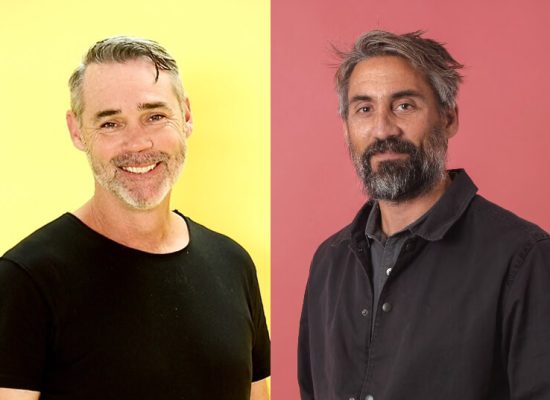

With more than two decades of experience managing some of the biggest brands at some of the world’s most high-profile agencies, Paul Roebuck, joins Darren to explore how people actually make decisions together inside organisations and across client-agency relationships.
As he prepares to return to Asia Pacific, where he began his career, Paul is establishing an independent advisory practice focused on helping organisations turn AI into meaningful transformation and lasting competitive advantage.
Paul shares his perspective on understanding the human elements of decision-making – who people trust, whose approval matters, and what makes them hesitate – and how these factors determine whether greater intelligence translates into better work.
He draws on his extensive global experience with brands like Ford and Colgate-Palmolive to illustrate how shared ambitions are translated into action across functions and markets.
The conversation delves into the intersection of human judgment and artificial intelligence. They discuss whether AI might make individual functions more effective while leaving the overall customer experience fragmented, and where human accountability must remain as machines take on more tasks.
Finally, they examine the commercial realities of this evolution. Using media-budget allocation as a concrete example, Darren and Paul discuss how to ensure that scopes and performance measures reward better decisions and accumulated learning. They also tackle the critical industry question of how future talent will develop judgment and experience when AI automates the foundational tasks that traditionally built those skills.
You can listen to the podcast here:
Follow Managing Marketing on Soundcloud, Podbean, TuneIn, Stitcher, Spotify, Apple Podcast and Amazon Podcasts.
We see people rushing to adopt the technology and get the quantity benefits, the speed benefits, the cost benefits, but we’re not asking ourselves the question: what benefit for the consumer or the customer?
Transcription (Edited):
Darren Woolley:
Hi, I’m Darren Woolley, founder and CEO of Trinity P3 Marketing Management Consultancy. Welcome to Managing Marketing, a weekly podcast where we discuss the issues and opportunities facing marketing, media, and advertising with industry thought leaders and practitioners.
When we look at how intelligence and data are used in marketing, the biggest hurdle often isn’t the technology. It’s how people make decisions together inside organizations—who they trust, whose approval matters, what gets rewarded, and what makes them hesitate. These human factors shape whether greater intelligence actually translates into better work, especially across the shared relationships between advertisers and their agencies.
As artificial intelligence expands what is possible, the question becomes: how should clients and agencies change the way they decide and act together so performance improves and useful learning accumulates?
To help us explore the intersection of human organization, decision-making, and AI, please welcome a business leader who has returned to Asia Pacific to establish an independent advisory practice helping organizations turn AI into meaningful transformation and lasting competitive advantage. Welcome, Paul Roebuck.
Paul Roebuck: Thank you very much, Darren. I’m delighted to be here.
Early Career and Global Agency Leadership
Darren Woolley: You’ve had a fascinating career at the big end of the advertising industry. How did you fall into advertising? Not many people make a conscious decision to enter it.
Paul Roebuck: It’s interesting—I started my career in advertising at a very early age because I decided this was what I wanted to do. Growing up at school in England in the 80s and early 90s, advertising was very much part of the country’s cultural fabric. We only had four television stations, and only two carried commercial time, so the work had to be worthwhile. Otherwise, people would switch to the BBC and do without it.
Advertising was part of our cultural identity; people talked about it and grew attached to it. I admired the industry from afar and wanted to contribute to it. Upon graduating from university, I joined Saatchi & Saatchi on 80 Charlotte Street in London as a graduate trainee.
Darren Woolley: That was 80 Charlotte Street?
Paul Roebuck: Yes, 80 Charlotte Street, the original home, right around the time Maurice and Charles Saatchi had just left. As a 22-year-old, I was exposed to fantastic talent in that building and became part of an amazing creative culture in that storied institution. I felt very fortunate and have loved the industry ever since. Now, I’m moving on to a new chapter.
Darren Woolley: Most of your career has been spent in major network agencies working with big global clients, hasn’t it?
Paul Roebuck: Yes. I spent about three years in London and then twelve years in Asia Pacific. I set up Saatchi & Saatchi Jakarta, ran BBDO Guerrero in the Philippines, led the turnaround at Saatchi Singapore, and managed Saatchi Malaysia. Twelve years ago, I moved to New York with BBDO and Omnicom, running large global client relationships like Johnson & Johnson, leading the pitch for the Ford business—which Omnicom secured—and running that for four years. Then I moved to WPP to lead the Colgate-Palmolive relationship globally.
I’ve benefited from working with large organizations that need help collaborating more effectively across different parts of the world. Now, at this momentous time where machine intelligence is changing how we work, make decisions, and create value, I have the opportunity to bring that experience back to Asia Pacific to help organizations leverage human and machine intelligence.
Traditional Hierarchy vs. Abundant Intelligence
Darren Woolley: These large organizations often work against a hundred thousand years of human evolution. Anthropologists suggest the average human can manage relationships with about 100 to 150 people in their immediate circle, yet corporate interactions involve thousands. How do you manage that complexity when collaborating across such massive numbers?
Paul Roebuck: Traditional corporate hierarchy grew out of a need to manage that exact complexity. Historically, human intelligence was the scarce resource inside an organization, so you built structures to funnel consequential decisions to the top. You had to understand how an organization dealt with authority, influence, and decision-making power to deliver value to the customer.
However, while human intelligence used to be scarce, intelligence is now abundant. Because intelligence is no longer scarce, the way organizations function, where authority sits, and who gets to decide must change as well. We haven’t given enough thought to that evolution yet, which makes this moment so exciting.
Darren Woolley: Modern corporate structure actually traces its origins to Roman legions. Rome dominated because they brought structure and discipline to their armies, allowing them to overcome stronger, less organized forces. That structure was developed two thousand years ago, yet after the Industrial Revolution, the technology revolution, and now the intelligence revolution, many org charts are still stuck in rigid hierarchies and silos that counter how modern businesses need to operate.
Paul Roebuck: That context highlights why this moment in history is so profound. It demands that we question the foundational myths of how we run businesses and create value. Technology fundamentally changes how we create inside an organization and how we decide what gets done.
Lessons from Historical Revolutions
Paul Roebuck: History doesn’t repeat, but it echoes. Consider electrification during the Industrial Revolution in the late 1800s. When electricity arrived, organizations initially just electrified the existing steam turbine shafts. They gained minor efficiencies, but nothing fundamentally changed.
It wasn’t until 20 years later, when Henry Ford realized smaller electric motors enabled a completely new kind of production line, that organizations truly transformed their value equation. They rebuilt the organization around the new technology rather than just bolting technology onto old ways of working.
We are in a similar place today. Many organizations want the benefits of AI and apply it to existing processes but often see limited success because they haven’t redesigned the organization around abundant intelligence.
Darren Woolley: We saw a similar shift when the internet arrived and democratized communication. Before that, communication was mostly written notes or phone calls. When email was introduced, early missteps—like accidental “reply-all” messages to whole companies—forced organizations to adapt.
While everyone focuses on an AI-driven future, we need to start with human needs and business objectives first. Just because you can build something doesn’t mean you should.
Paul Roebuck: Exactly. In marketing and advertising, generative AI allows us to produce vast volumes of content faster and cheaper. But someone still has to decide who needs that communication, what they should get from it, and whether it earns the right to exist.
Rushing to adopt technology for speed and cost benefits without asking how it serves the customer misses the point. We need to start by identifying the recurring, consequential decisions a business makes that create real customer value. From there, we examine the system—the people, tools, processes, and politics—to determine where machines should assist and where human judgment must reside.
Efficiency vs. Effectiveness: Focusing on Value Beyond Cost-Cutting
Darren Woolley: That comes down to efficiency versus effectiveness, or productivity versus performance. Early discussions around AI have focused heavily on cost efficiency rather than improving overall performance. Isn’t that the wrong way in?
Paul Roebuck: Absolutely. Over the last two years, conversations with clients often revolve around cutting costs because consultants told them AI allows work to be done cheaper with fewer people. In a fee-for-service or time-and-materials model, asking for savings seems logical. However, if clients strip away all margin without giving agency partners a reason to invest in technology, agencies have no incentive to evolve or deliver better customer results.
While looking for efficiency isn’t wrong, it shouldn’t come at the expense of creating real value.
Darren Woolley: As the saying goes, you can’t cut your way to growth. If you constantly cut inputs, you won’t produce the outputs required for growth.
Navigating Global Dynamics and Local Market Incentives
Darren Woolley: How does this complexity play out in global organizations? Central headquarters often take a command-and-control approach, expecting regional offices to simply execute instructions.
I remember working with a German company whose regional head office in Hong Kong was staffed by expatriates who wondered why local Asian markets weren’t following orders. We found that local market teams would listen to central directives and then gather to decide what they were actually going to do locally, essentially bypassing central commands because headquarters didn’t understand local context.
Paul Roebuck: I’ve made my share of mistakes that taught me empathy in global roles. Throughout my twelve years in New York, running global accounts for J&J, Ford, and Heineken, I learned that you must understand the position of people on the ground.
Headquarters will always have a plan, but central playbooks and PDF scorecards rarely work if they ignore local realities. Local teams end up gaming the system. When I led global teams, my job was to ensure central initiatives genuinely helped local markets achieve their goals. You have to give local teams a reason to participate by aligning incentives.
Take AI in production supply chains as an example. Centralized production offers scale benefits, but local managers who control their own budgets and rely on trusted local suppliers won’t give up control unless the centralized solution clearly serves their local goals. You must construct incentives so local teams actively want to participate.
Redesigning Recurring Decision Systems
Darren Woolley: Globalization often exacerbates silos. Each market has its own leadership accountable for a local P&L, yet central functions try to dictate spending, creating friction.
Paul Roebuck: Exactly. The core lesson from my career in global leadership is that the unit of change isn’t the entire organization, a single function, or a capability. The unit of change is a recurring decision that impacts customer value.
Instead of trying to mandate top-down organizational redesigns that rarely work, organizations should identify their most consequential recurring decisions at a market, regional, or global level. Examine how those decisions are currently made, who holds authority, and how to redesign the decision process to work better today. Then measure the results, retain the learning, and repeat the process.
Incremental changes to decision systems can yield profound results, especially in a world of abundant intelligence.
Bounded Experimentation vs. Rigid Control
Darren Woolley: That reflects the difference between Western and Eastern thinking described by Edward de Bono. He contrasted “rock thinking”—where people bring an idea to the table and smash it with rocks to test its strength—with “water thinking,” where everyone adds drops of water until the idea grows into a river.
When companies force central consistency in a command-and-control manner, they sacrifice growth opportunities. AI can scare global leaders because it empowers local markets to act more independently and efficiently.
Paul Roebuck: AI is a tremendously empowering technology at every level. It enables teams to produce work in-house that previously required external partners, creating cost benefits. However, organizations still need the capability to judge, protect, and refine ideas—whether through rigorous debate or collaborative growth.
The answer to technological empowerment cannot be tighter control or stopping experimentation. The solution is bounded experimentation and learning, building layer upon layer. If you try to shut people down, water will always find a way around the barrier.
Empathy and Emotion in Machine Decision-Making
Darren Woolley: In advertising, we know people make emotional decisions and then rationalize them. Yet clients and agencies often rely on data and rational arguments to justify decisions. With AI presenting reams of data, how much of decision-making remains emotional versus rational?
Paul Roebuck: Machines do not feel emotion or empathy. They are probability engines assessing likely outcomes based on data, which is fundamentally different from making a human decision.
We must design decision-making systems where machines assist with data and probabilities, while humans retain authority over emotional judgment and empathetic nuances. Organizations act like biological mechanisms. You must understand the overall system before integrating machine intelligence; otherwise, you simply end up making faster, more frequent mistakes.
Darren Woolley: In pitching, a new CMO often puts the account up for review within six months. When pressed on why, their justifications are often post-rationalizations of an emotional decision—like “they’re just not my people” or “the chemistry isn’t right”.
Paul Roebuck: Exactly. We make emotional judgments and then rationalize them to others. A new CMO wants to ensure success, and my role is to help leaders identify where the greatest leverage lies. Often, real improvement comes not from a nine-month agency pitch or expensive tech demo, but from redesigning decision-making authority inside the organization.
Auditing and Codifying Organizational Decisions
Darren Woolley: Where should a marketing leader start when looking to transform their organizational structure and embrace AI?
Paul Roebuck: One-size-fits-all mandates rarely work. The starting point is asking what we are trying to achieve and what recurring decisions drive those outcomes.
Rather than starting with a tech platform, my approach begins by auditing all the consequential decisions an organization makes to achieve its desired outcomes. We rank those decisions to identify where changing authority or conditions offers the highest leverage. From there, we diagnose how those decisions are actually made in practice—uncovering the company politics, human relationships, and unspoken rules that aren’t written in any playbook. Once we understand that reality, we can redesign the decision-making system to determine where machines should assist and where human judgment belongs, ultimately codifying those rules into machine-readable instructions.
Darren Woolley: Unspoken knowledge and organizational memory are critical assets, but they are very hard to map.
Paul Roebuck: It is hard, but essential. Machines require explicit logic and clear boundaries to operate effectively. Codifying decision-making systems gives organizations a clear benchmark to evaluate technology tools based on actual operational needs, rather than buying flashy software demos that fail to deliver.
AI is a general-purpose technology that impacts every function. It cannot be delegated solely to IT, nor handed over to a junior enthusiast labelled as a “Chief AI Officer”. Leaders must evaluate decision-making across the entire business.
Embracing Uncertainty: The Future of AI and Human Expertise
Darren Woolley: Is part of the difficulty in this transition driven by a fear of losing control?
Paul Roebuck: Fear is a reasonable response. We are seeing AI capabilities rapidly evolve, sparking widespread debates about control, job shifts, and organizational impact. No one can predict with absolute certainty how this will unfold over the long term.
However, that uncertainty also presents an incredible opportunity. By focusing on how human judgment and machine intelligence work together, organizations can harness AI to create genuine, lasting value.
Darren Woolley: Paul Roebuck, time has got away from us. This has been a fascinating discussion, and I really appreciate you making the time to share it with us.
Paul Roebuck: Thank you very much. I’m looking forward to keeping the conversation going. It’s an exciting time for all of us.
Darren Woolley: Look, I’ve got a question for you before you go. Given your experience across the various agency networks and holding companies—and as you said earlier, they’re all investing heavily in this technology—who do you think is actually in front at the moment?