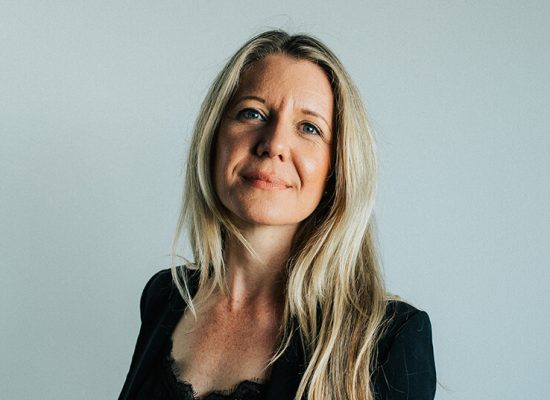
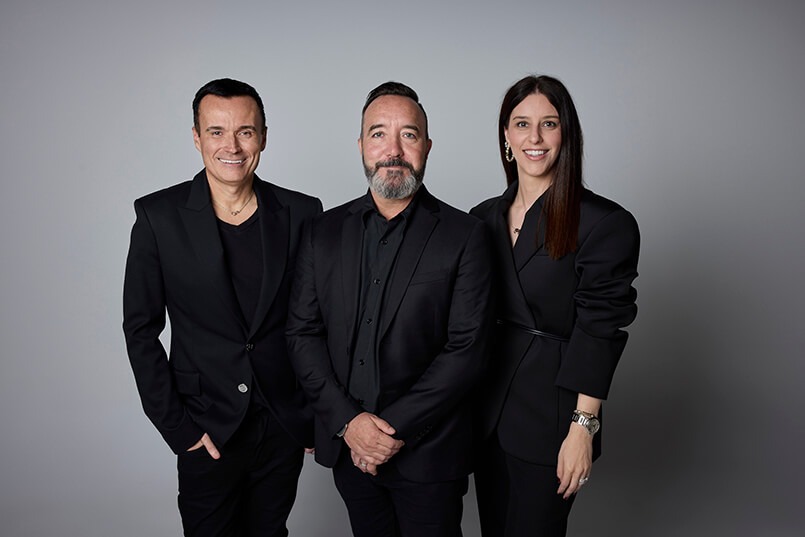
The Starcom Australia leadership team, CEO Matt Houltham, Chief Operating Officer, Louise Romeo, and Chief Client & Growth Officer Scott McCaffrey explore the evolving definition of a media agency partnership as AI continues to reshape the industry.
As the marketing landscape faces “twin evil forces” of increasing uncertainty and growing complexity, the conversation dives into how agencies must move beyond simple efficiency to drive true business effectiveness.
And they address the future of partnership, highlighting why being a proactive partner means knowing a client’s business inside out to solve complex commercial challenges rather than just selling media solutions.
You can listen to the podcast here:
Follow Managing Marketing on Soundcloud, Podbean, TuneIn, Stitcher, Spotify, Apple Podcast and Amazon Podcasts.
“You’re our agency, please look after this ’cause we’ve got enough to do already”.
Transcription (Edited):
Darren Woolley:
Hi, I’m Darren Woolley, founder and CEO of Trinity P3 Marketing Management Consultancy, and welcome to Managing Marketing, a weekly podcast where we discuss the issues and opportunities facing marketing, media, and advertising with industry thought leaders and practitioners.
I’ve often stated that in my many years of working with marketers, I’ve never met a marketer with too much budget. It always feels like marketers need to do so much more with so little. In the face of growing complexity in the marketplace – with the fragmentation of media channels and audiences – markers feel like they have to be everywhere all at once. Yet the cost of this is typically prohibitive.
Sure, AI promises that agencies can do so much more with less, but in the media world, what does that mean? To answer these questions and so much more, please welcome the trinity of experts from Starcom Australia:
CEO Matt Houltham, Chief Operating Officer Louise Romeo, and Chief Client & Growth Officer Scott McCaffrey.
Matt, I’ll start with you. Where is the pressure coming from, and as an agency leader, how do you deal with that on a day-to-day basis?
Matt Houltham:
I think you summed up where the pressure is coming from quite well in your opening. There are twin ‘evil forces’ at play at the moment driving a huge amount of uncertainty for marketers and, simultaneously, driving a huge amount of additional complexity. The combination of those things is creating a situation where budgets are constrained.
I saw a statistic a few weeks ago talking to global CMOs regarding plans for 2026; it said 70% of them had budgets that were either going down or staying flat. In that context, it’s very hard to do ‘more’ with a budget that’s going backwards. Uncertainty drives challenges around business planning, supply chain access, and competitive landscapes. Meanwhile, complexity arises from a changing media landscape, evolving consumer behaviour, and AI collapsing the funnel.
The Four Pillars of Maximising Media Budgets
Matt Houltham:
In our view, there are four key areas where brands need to focus if they’re going to get more from limited resources.
- Audience Accuracy: Going after the right audiences. There’s a massive amount of wastage in targeting the wrong people. A Rakuten Marketing survey recently showed global CMOs admitting they likely waste 26% of their budget talking to the wrong audiences in the wrong channels. In Australia, that’s potentially upwards of $5 billion left on the table.
- Optimised Touchpoints: Turning up in the right places. It’s never been easier to reach people, but it’s never been harder to cut through and engage them.
- Creative Cut-Through: Being more creative. Media has a massive role in amplifying a good idea, not just distributing it.
- Media Creativity: Finding creative ways to use the channels themselves.
Darren Woolley:
That 26% wastage figure is fascinating. It reminds me of the old saying, “Half my budget is wasted; I just don’t know which half.” Today, we have thousands of advertising opportunities, and new ones pop up every day. That is the heart of the complexity – reaching the right person at the right time in a meaningful way.
Operational Excellence: From Efficiency to Effectiveness
Darren Woolley:
Louise, it used to be called ‘having a strategy,’ but I feel marketers are really struggling with defining what they actually want. How does this change the way you bring the resources of the agency to bear?
Louise Romeo:
You’re absolutely right. When we think about how the business is operating, it comes back to the business strategy. But within the agency, we are shifting from old definitions of ‘operational excellence’. In the past, it was all about driving efficiencies – tighter processes and getting to market quickly.
Now, with technology, automation, and AI, we have to think about how operational excellence can drive effectiveness. It’s about setting up the agency to be AI-enabled or technology-enabled but also designing workflows that allow the teams to exercise better judgment quickly. The market changes so fast – a client might communicate a sudden shift, and we need to adapt the campaign immediately. We call this ‘adaptive intelligence’. The agencies that win will be the ones that can change at the same pace as the market.
Darren Woolley:
Hasn’t that always been the case, though? Or has the timeline just sped up? It feels like the 13-week planning cycle for a TV campaign is a relic of the 20th century.
Matt Houltham:
It has definitely sped up, but it’s also more complicated. Clients are asking us to think more broadly. We are planning across PESO – Paid, Earned, Shared, and Owned media. We’re also being asked to operate like light consultants – helping them see around the corner, helping them use first-party data, and activating their adtech. Those [roles] weren’t the remit of a media agency five or ten years ago. Agility now underpins everything.
Navigating the Overwhelmed Client Landscape
Darren Woolley:
Scott, you work across a multitude of clients. Not all clients have the same needs – some are in different stages of maturity or different categories. How do you identify those needs?
Scott McCaffrey:
Every client is feeling overwhelmed right now. There’s too much data, too many choices, and too many decisions. Agencies that succeed are the ones that reduce that complexity and provide a clear point of view.
We do this by anchoring everything in a business outcome. We are moving away from traditional media metrics and moving toward business metrics.
Darren Woolley:
That’s a big breakthrough. Many marketers are given a budget but aren’t given the finance-level data to see what’s actually working.
Scott McCaffrey:
100%. Often, we’ll get a brief with multiple KPIs. We have to sit with the client and figure out which one is actually going to drive the outcome for their business. We’ve evolved to be an extension of their marketing team. At Starcom, we’ve had relationships for decades with some clients, which allows us to evolve alongside them.
Darren Woolley:
Long-term relationships are a sign of stability, but there’s often a fear of stagnation. How do you keep it fresh?
Scott McCaffrey:
You keep it fresh by being integrated. Because we know where the business is going (we’re in the board meetings), we can future-proof the strategy. We might wrap a digital transformation capability around a traditional client’s business. The benefit for the client is they aren’t constantly retraining a new agency. We know the business as well as they do, but we evolve at the pace of the market.
The “Trust Bank”: Trust as a Loan, Not a Gift
Darren Woolley:
We’ve discussed trust quite a bit. Scott, where do you think trust starts?
Scott McCaffrey:
You definitely don’t get trust just because you win a pitch. You win a pitch because of the skill you showed. You build trust over time through the relationship. I talk to our teams about a ‘Trust Bank’. You build up credit over time, but one mistake can erode it. You have to constantly build it back up through results and showing up the right way.
Darren Woolley:
I’ve always seen trust as a loan. No one appoints an agency they don’t trust, but they loan you that trust, and it comes with a heavy interest rate. You have to pay it back over time. The first big payback is usually the first disaster – how the agency responds when something goes wrong.
Scott McCaffrey:
That resonates. You’re almost constantly in pitch mode, because client expectations are higher than ever. If you haven’t paid off that trust loan in the first year of a three-year contract, you’re never going to be ahead.
Darren Woolley:
One of the most common reasons a client seeks a new agency is the feeling that the incumbent isn’t proactive. But agencies often mistake ‘proactivity’ for sales – offering more media to buy. True proactivity is about coming up with opportunities that drive business outcomes, not just selling more inventory.
The Reality of AI: Multipliers vs. Strategies
Darren Woolley:
Publicis Groupe was an early mover with the AI platform, Marcel. Scott, where are clients today regarding AI?
Scott McCaffrey:
AI is the hot topic in every meeting. Most clients are in the infancy stage – they don’t have a fully progressed strategy yet. They are looking to us for leadership. We’re doing tiered training for our teams because that’s where we have to start.
Louise Romeo:
We tell clients that AI is a multiplier, not the strategy itself. There’s a part in the middle where humans and technology coexist. We’re embedding these tools to deliver better results. But the pace of change is so fast that we have to constantly educate ourselves to move from mere experimentation to strategic application.
Darren Woolley:
There are two streams:
productivity and performance. I worry that if senior people use AI to get more done, where does the next generation come from? Senior media people usually start with grunt work to understand the plumbing of the industry. If AI does the grunt work, how do juniors learn?
Louise Romeo:
We see AI as an investment in talent. The tasks they do today will be different in the future. We have to re-skill our teams for critical judgment and creativity in media. That way, we move them from task output to higher-level thinking.
Matt Houltham:
AI should free up time to spend with the client – understanding their business issues or thinking creatively. It enables better insights by synthesising large amounts of data. But you still need the human in the loop to manage hallucinations or errors.
The Return to ‘M-Shaped’ Talent and Human Creativity
Darren Woolley:
Louise, how do you attract great talent to an industry that often has a negative narrative?
Louise Romeo:
It’s a wonderful industry. We focus on ‘M-shaped’ talent – people who have a craft specialism but are also great connectors across different media ecosystems. We want our teams to feel they are learning something new every day. Happy teams equal happy clients.
Matt Houltham:
The efficiency of AI is important, but the real value is in the insight. AI is great at looking at patterns from the past. However, most sales effects in advertising come from the creative idea and the message, not just the channel.
If we aren’t talking about whether creative is fit for purpose, we’re missing a trick. We work closely with creative agencies to ensure the message and the media deployment work synergistically. I’ve even seen some newer Marketing Mix Models (MMM) claiming they can now measure the creative component.
Darren Woolley:
That’s the ‘holy grail – attributing the impact of content. There’s no point in having someone’s attention if you have nothing worthwhile to show them. I like that CFOs are getting more involved and that marketers are taking a more commercial approach.
Thank you, Matt, Louise, and Scott, for joining us and sharing these insights into the future of Starcom and the wider media landscape.